
The short answer: keep at least a several-day supply of non-perishable food your household will actually eat, plus a manual can opener, and plan for infants, pets, and special diets (Ready.gov Food). FoodSafety.gov puts the floor at a 3-day supply.
Stock foods that need little or no refrigeration, cooking, or water, because power and utilities can fail for days. Then learn the outage and disaster rules that decide what to keep and what to throw away.
This guide covers short-term kits, longer pantry builds, safe storage and packaging, blackout timing, flood and fire discard rules, outdoor-only cooking and generator safety, and a printable checklist. It is practical household preparedness, not a medical diet plan or a home-canning manual. Pair it with our Ultimate Guide to Water Storage.
Jump to:
Quick picks: planning floors (sourced)
Why Emergency Food Matters
After an emergency, you may need to get by on your own for several days with the food, water, and supplies you already have (Ready.gov Build a Kit). Stores, banks, and gas stations can close when power fails.
Without electricity, refrigerated and frozen food can leave the safe temperature range quickly. Bacteria grow fast between 40°F and 140°F (Ready.gov Food). That is why shelf-stable food you will eat cold or with minimal prep is the backbone of a household kit.
The goal here is readiness you can maintain: familiar foods, honest discard rules, and clear carbon monoxide warnings. It is not a promise that any pantry lasts forever, and it does not replace advice from your clinician for medical diets.
Household food readiness also reduces pressure on neighbors and relief lines in the first days after a storm. Ready.gov’s kit message is blunt: after an emergency you may need to survive on your own for several days. That is not a reason to panic-buy, but it is a reason to finish a simple shelf before the forecast turns ugly.
Think in layers. The first layer is food you can open and eat with no power. The second layer is staples you rotate through normal cooking when utilities work. The third layer — optional for most households — is longer-term dry goods packaged carefully and stored cool. Jumping straight to specialty buckets while the short-term shelf is empty is the wrong order.
How Much Food to Store
FoodSafety.gov says to plan for at least a 3-day supply of food. Ready.gov asks for at least a several-day supply of non-perishable food and notes you may need to survive on your own for several days.
Those two phrasings are close, not identical. Use 3 days as a clear floor from FoodSafety.gov, and treat Ready.gov’s “several days” as the same short-term kit mindset. Stretching to two weeks or more is a common prepper goal, but it is an optional household target in this guide, not a number Ready.gov prints as a food mandate on its Food page.
Short-term kit
Two-week buffer
Longer-term staples
Choose foods you will eat
Pick foods your family already accepts, and remember special dietary needs (Ready.gov Food). A kit full of food nobody likes is a kit that fails under stress.
Count people, not vibes. A household of two adults needs less variety than a household with toddlers, teens, or elders, but it may need just as much attention to medications and easy-open packaging. Write the number of people and pets on a card taped inside the pantry door, then multiply your short-term kit against that headcount.
Separate “kit food” you will not casually snack through from “pantry food” you cook every week. Kit food fails when it is the same bag of chips everyone raids on Friday night. Pantry food fails when you never buy a spare can. You need both habits.
Calories, Nutrition, and Personal Needs
There is no single emergency calorie number in this guide. Needs change with age, size, activity, pregnancy, illness, and medical conditions. Inventing a universal “calories per person per day” target would overstate what Ready.gov and FoodSafety.gov publish for household kits.
Instead, inventory who lives in the house, what they can safely eat, and how active an outage might keep them. Favor foods that are not very salty or spicy when drinking water may be limited (FoodSafety.gov).
For diabetes, allergies, swallowing issues, or any therapeutic diet, follow your clinician or registered dietitian. This page cannot prescribe medical nutrition.
In practice, most short-term kits succeed or fail on familiarity and safety, not on perfect macro tracking. If someone in the home needs gluten-free, dairy-free, low-sodium, soft foods, or a prescribed oral nutrition drink, those items belong on the shopping list before bulk rice does.
People with higher needs during heat, pregnancy, recovery from illness, or heavy outdoor cleanup work will often need more water and more frequent meals. Meet that with extra water first — see the water guide — then with additional ready-to-eat options rather than a made-up calorie spreadsheet.
Sample Pantry Menus (Examples Only)
These menus are illustrations, not dietary prescriptions. Quantities are rough package counts for planning a shopping list. Adjust for your household, and read the labels on the foods you buy.
Example only. Not a calorie-controlled meal plan. Not medical advice. Swap items for allergies and preferences. Keep a manual can opener with every canned kit.
Example day — 2 adults (ready-to-eat lean)
- Breakfast: Dry cereal or granola + shelf-stable milk carton or powdered milk mixed with safe water
- Lunch: Peanut butter + crackers or bread that keeps; dried fruit; canned juice
- Dinner: Ready-to-eat canned meat or fish + canned vegetables + canned fruit
- Snacks: Protein or fruit bars; comfort food your household will actually eat
Example add-ons — child in the home
- Extra shelf-stable milk or formula as directed for that child
- Familiar comfort snacks to reduce stress eating battles
- Foods that need little chewing if that matches the child
- Never share adult medications or adult-only supplements as “food”
A second illustrative pattern for a longer outage is to alternate no-cook days with one simple heated meal only if you have a safe outdoor cooking setup and enough water for cleanup. On no-cook days, lean on cans, nut butters, shelf-stable milk, fruit cups, and bars. On a carefully managed outdoor-cook day, a single pot of heated canned soup or stew can raise morale without burning through fuel.
Again: adapt. A household that never eats peanut butter should not stock peanut butter because a checklist mentioned it. Replace with another Ready.gov-style staple that fits allergies and tastes. Keep the manual can opener in the same bin as the cans, not in a junk drawer across the house.
What Foods Work Best (and the Tradeoffs)
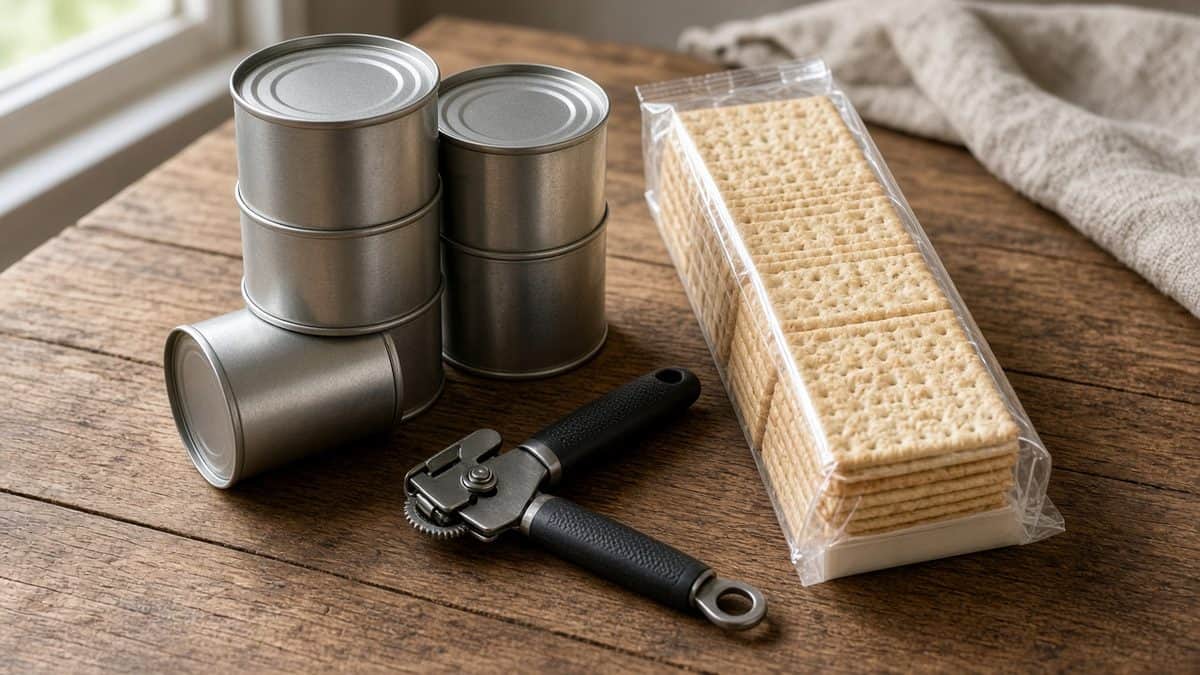
Ready.gov recommends stocking canned foods, dry mixes, and other staples that do not require refrigeration, cooking, water, or special preparation, and pairing them with a manual can opener and utensils.
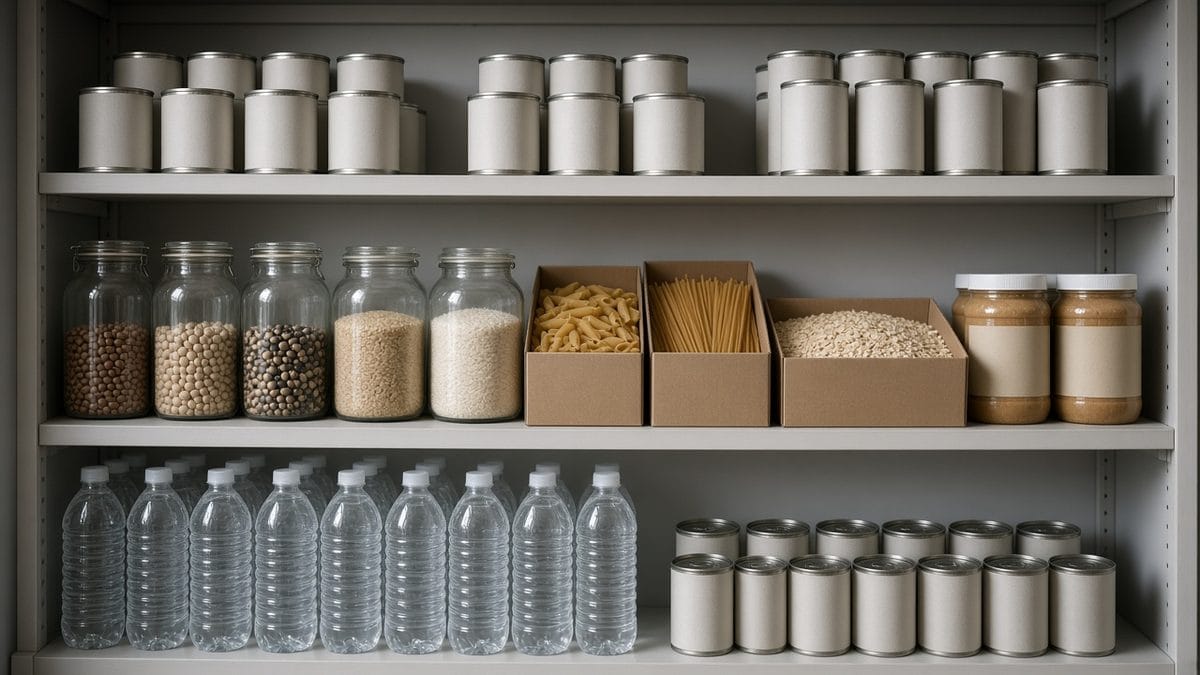
| Food type | Best for | Limits | Upkeep |
|---|---|---|---|
| Ready-to-eat canned meats, fruits, vegetables | No cooking; works cold | Weight; need a manual opener; discard swollen, dented, or corroded cans | Cool, dry storage; rotate by date |
| Peanut butter, bars, granola, dried fruit | Dense energy; minimal prep | Allergies; some are salty or sticky for kids | Seal after opening; watch heat |
| Shelf-stable milk and canned juices | Familiar drinks when fridge is offline | Opened cartons follow outage discard rules | Store upright; rotate |
| Dry mixes and staples | Stretch meals if you still have safe water and a safe heat source | May need water and fuel you do not have in a blackout | Keep boxed foods in closed plastic or metal containers (Ready.gov) |
| Comfort / stress foods | Morale during hard days | Do not crowd out calories and water needs | Pick items you already like |
Avoid leaning only on very salty or spicy foods when water may be scarce (FoodSafety.gov). This guide does not rank brands or invent multi-year shelf lives for specific grocery products.
Weight and space matter if you might evacuate. Canned goods are durable and ready to eat, but they are heavy. Bars and pouched foods pack lighter for a car kit. Home dry staples in buckets are poor grab-and-go choices unless you pre-pack a smaller tote.
Acidic canned fruits and tomatoes often show quality changes sooner than low-acid canned meats and vegetables. On its dating page, FSIS notes that high-acid commercially canned foods (for example tomatoes and fruits) generally keep best quality for about 12 to 18 months, while low-acid commercially canned foods (for example meats and vegetables) generally keep best quality for about two to five years. Those ranges are quality guidance for undamaged cans — not a claim that a can becomes unsafe the day after. Still discard cans that are swollen, badly rusted, leaking, or spurting when opened.
Water and Fuel Implications
Food planning fails without water. Ready.gov’s kit guidance is one gallon of water per person per day for several days for drinking and sanitation. FoodSafety.gov uses the same gallon-per-person-and-pet daily floor and a least-a-3-day water supply, with extras for hot climates, pregnancy, and illness.
Cooking multiplies both water and fuel demand. When utilities are down, ready-to-eat cans and no-cook staples conserve both. For storage, treatment, and hidden household water sources, use the Ultimate Guide to Water Storage.
Special Diets, Infants, Medical Needs, and Pets
Ready.gov’s kit list calls out infant formula and bottles, pet food and extra water, prescription medications, and other personal needs. Build those into the plan before you buy bulk “calories.”
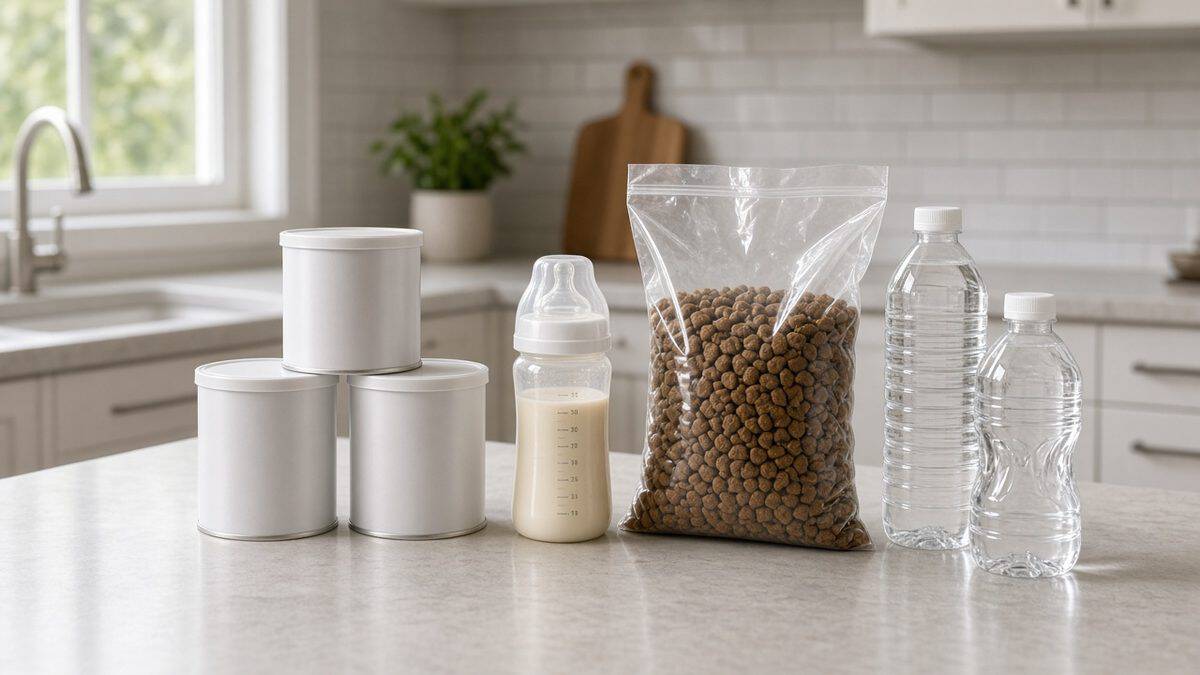
Infant formula dates are different. Federal rules require a “Use-By” date on infant formula. Do not buy or use formula after that date. That date is about nutrient content and quality for feeding, not a casual quality suggestion (USDA FSIS Food Product Dating).
Infants
Prefer ready-to-feed formula when you can. If you must mix formula, Ready.gov says to use bottled water, or boiled water as a last resort. After outages, opened baby formula follows perishable discard rules on the FoodSafety.gov charts.
Allergies and medical diets
Store what the person can actually eat. Do not invent substitutes for allergens or therapeutic foods. Ask a clinician before changing a medical diet in an emergency.
Pets
Set aside pet food and extra water. Do not assume human pantry food is appropriate or safe for every animal.
Refrigerated medicines
If power is out more than a day, Ready.gov says to discard refrigerated medication unless the label says otherwise, then contact a doctor or pharmacist for a new supply (Power Outages).
Build Gradually on a Budget
You do not need a warehouse of specialty buckets on day one. FoodSafety.gov notes that buying dehydrated or other specialty emergency food is not required for an emergency supply.
Ready.gov’s low- and no-cost guidance suggests building a kit over time: start with what you already have, then pick up an extra staple you use regularly on grocery trips, especially when it is on sale.
Priority order that matches the official lists: safe water plan, manual can opener, non-perishables your household will eat, then infant, medical, and pet needs.
Safe Storage: Heat, Moisture, Pests, and Location
FoodSafety.gov recommends a cool, dry, dark place, with a best temperature band of 40°F to 70°F for enhancing shelf life of canned or dried foods. Keep food away from ranges and refrigerator exhausts. Heat shortens quality life.
Store food away from petroleum products such as gasoline, oil, paints, and solvents, because some foods absorb those smells. Protect packages from rodents and insects; boxed foods last longer when heavily wrapped or kept in waterproof, airtight containers. Put stores on shelves that stay above possible floodwater.
Kit maintenance (Ready.gov)
- Keep canned food in a cool, dry place.
- Store boxed food in tightly closed plastic or metal containers.
- Replace expired items as needed.
- Rethink household needs every year and update the kit.
Garages and attics swing hot and cold. That shortens quality life for many dry and canned foods and can melt chocolate, separate oils, or warp plastic. A hall closet or interior pantry shelf usually beats a shed. Keep food off bare concrete when you can, and never store drinking-water or food containers that once held fuel or chemicals.
Pest control is part of food storage. Look for chewed corners, webbing, or live insects when you rotate. USU Extension describes freezing suspect dry goods at 0°F for three to four days to kill insects at life stages before you repackage dry staples. Do not skip the moisture rules when you add oxygen absorbers afterward.
Packaging: Cans, Jars, Mylar, Buckets, and Oxygen Absorbers
Most households can start with commercial canned and boxed foods. Longer-term dry staples may use foil laminate pouches (often called Mylar), food-grade buckets, PETE bottles, glass jars, or metal cans. Packaging choices change risk when moisture and oxygen are involved.
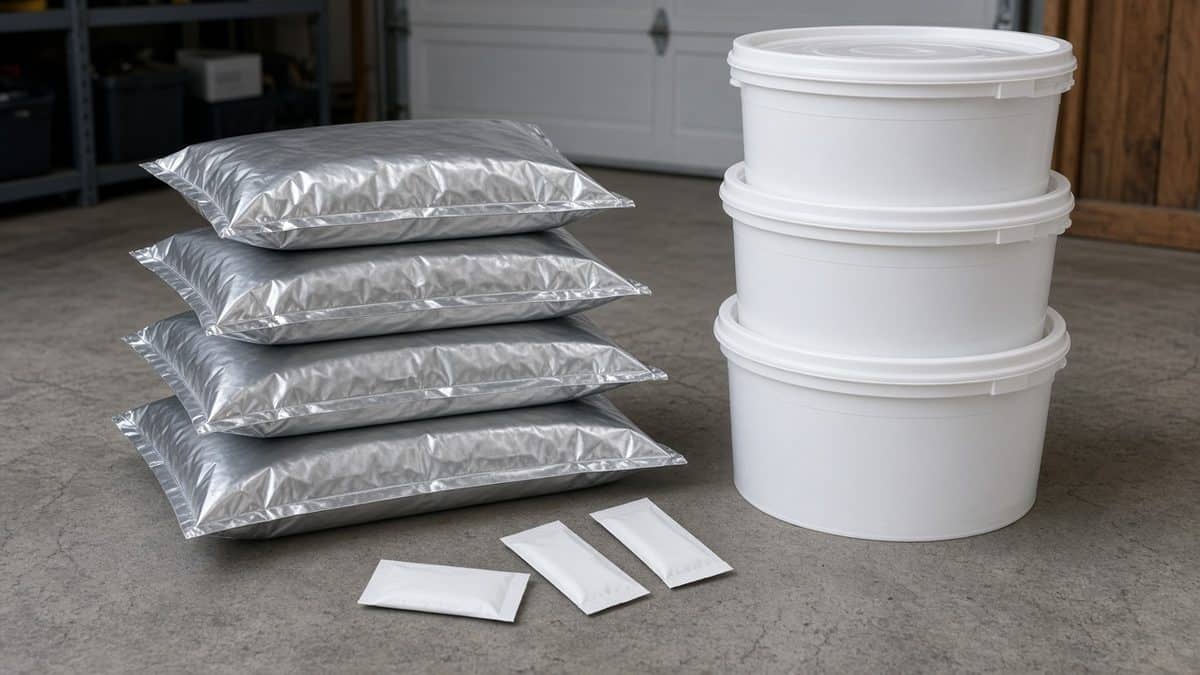
Oxygen absorbers and vacuum packing are for dry foods. Utah State University Extension warns that botulism poisoning may result if moist products are stored in packaging that reduces oxygen. When food is stored in airtight containers with oxygen absorbers, products must be dry — about 10% moisture or less (USU Extension, 7 Factors That Prolong Your Food Storage Supply; same warning in USU’s Food Storage Booklet).
The National Center for Home Food Preservation notes home-dried fruit is about 20% moisture after drying and needs conditioning, while vegetables dried until brittle are about 10% moisture (NCHFP Packaging and Storing Dried Foods). Do not put leftovers, partially dried food, or moist home-dried fruit into absorber-sealed packs.
Commercial cans and retort pouches
Inspect before use. Ready.gov says not to eat from swollen, dented, or corroded cans even if the food looks normal, and not to eat food that looks or smells abnormal.
Home canning
Use only tested USDA / NCHFP methods in proper canning jars. Low-acid foods need pressure canning. This guide does not include canning recipes. Unverified DIY methods can cause botulism (NCHFP).
Oven “dry canning”
NCHFP does not recommend heating dry foods in canning jars in a home oven as a preservation method (“Dry Canning” Isn’t Canning). Prefer room-temperature vacuum jar adapters or oxygen absorbers for thoroughly dry foods, following extension guidance.
Buckets and pouches
Food-grade buckets help with bulk and pests, but plastic still allows oxygen transfer over long periods. Foil pouches with a good heat seal and correctly sized absorbers are a common dry-staple approach (USU Packaging Foods). Rodents can chew pouches, so many households nest pouches inside buckets.
Shelf Life vs Best-By vs Safety
Except for infant formula, federal rules do not require open dating on most foods, and the dates manufacturers print are generally about quality, not safety (FSIS Food Product Dating).
| Label phrase | What it usually means (FSIS) |
|---|---|
| Best if Used By / Before | Best flavor or quality — not a purchase or safety date |
| Sell-By | Store inventory guidance — not a safety date |
| Use-By | Last date for peak quality — except infant formula, where Use-By must be followed |
| Freeze-By | When to freeze for peak quality — not a safety date |
If a quality date passes during home storage, FSIS says the food should still be wholesome if handled properly until spoilage is evident (off odor, flavor, or texture). Still discard damaged cans and anything held in the temperature danger zone too long.
FIFO Inventory and Rotation
Use and replace food before its date when you can (FoodSafety.gov). First-in, first-out keeps the emergency shelf from turning into a museum.
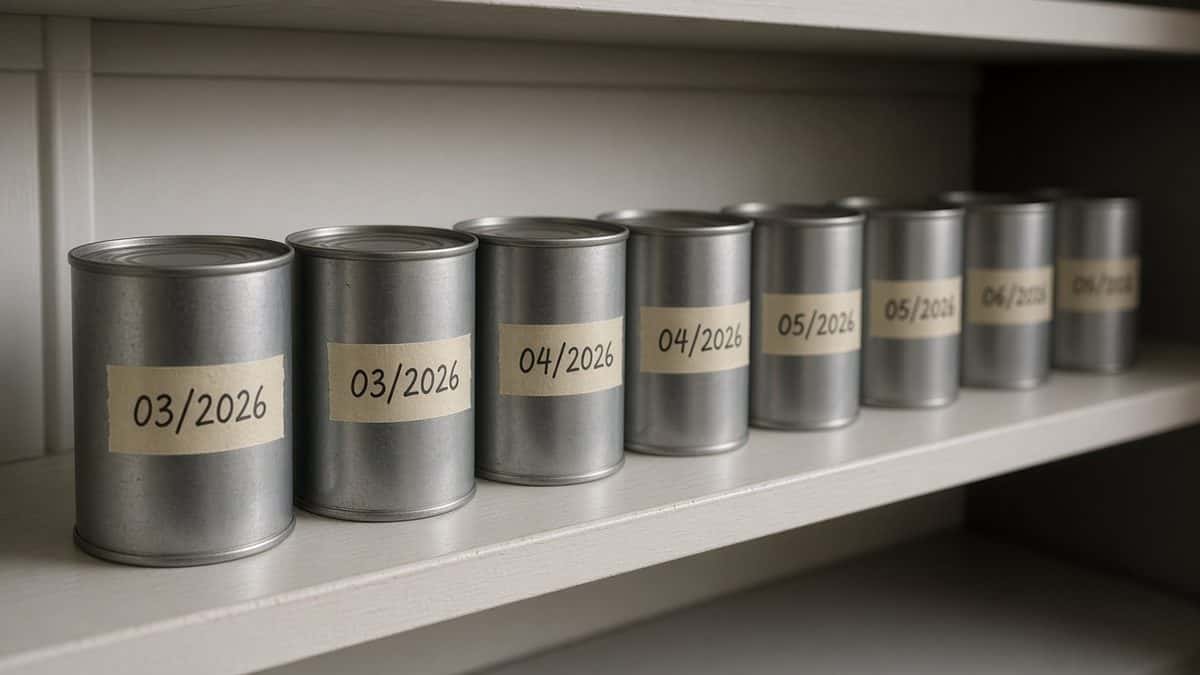
Label cases with purchase or pack months. Eat storage food in normal meals. Ready.gov’s kit maintenance steps — replace expired items and rethink needs yearly — apply here too. Keep a small “open first” bin separate from sealed long-term staples.
Power Outages: Refrigerator and Freezer Rules
Keep refrigerator and freezer doors closed as much as possible. Across Ready.gov, USDA FSIS, FDA, CDC, and FoodSafety.gov, the core timing is consistent:
Temperature rules
- Refrigerator food belongs at 40°F (4°C) or below; freezer at 0°F (-18°C) or below.
- Discard perishable food that has been above 40°F for 2 hours or more, or 1 hour if outdoor temperatures are above 90°F (Ready.gov / FoodSafety.gov). Separately, plan as if an unopened refrigerator keeps food safe only about 4 hours without power.
- Never taste food to decide if it is safe. When in doubt, throw it out.
- Frozen food that still has ice crystals or is 40°F or below can usually be refrozen or cooked; quality may suffer.
Dry ice figures differ by freezer size — do not invent a per-cubic-foot formula by blending pages.
- Ready.gov Food: 25 pounds of dry ice can keep a 10-cubic-foot freezer below freezing for 3 to 4 days.
- FSIS / FDA / FoodSafety.gov: 50 pounds of dry ice should keep an 18-cubic-foot fully stocked freezer cold about 2 days.
Use the figure that matches your freezer from the page you follow. Do not average or scale those two examples into a new homemade dose. Wear dry, heavy gloves. Do not touch dry ice with bare hands or place it in direct contact with food. Know local sources for dry ice or block ice before a storm.
Plan ahead with appliance thermometers in both fridge and freezer, frozen water jugs or gel packs, and coolers. During a snowstorm, do not store perishable food outdoors in the snow; make ice in clean containers and use it inside coolers instead (FSIS / FDA).
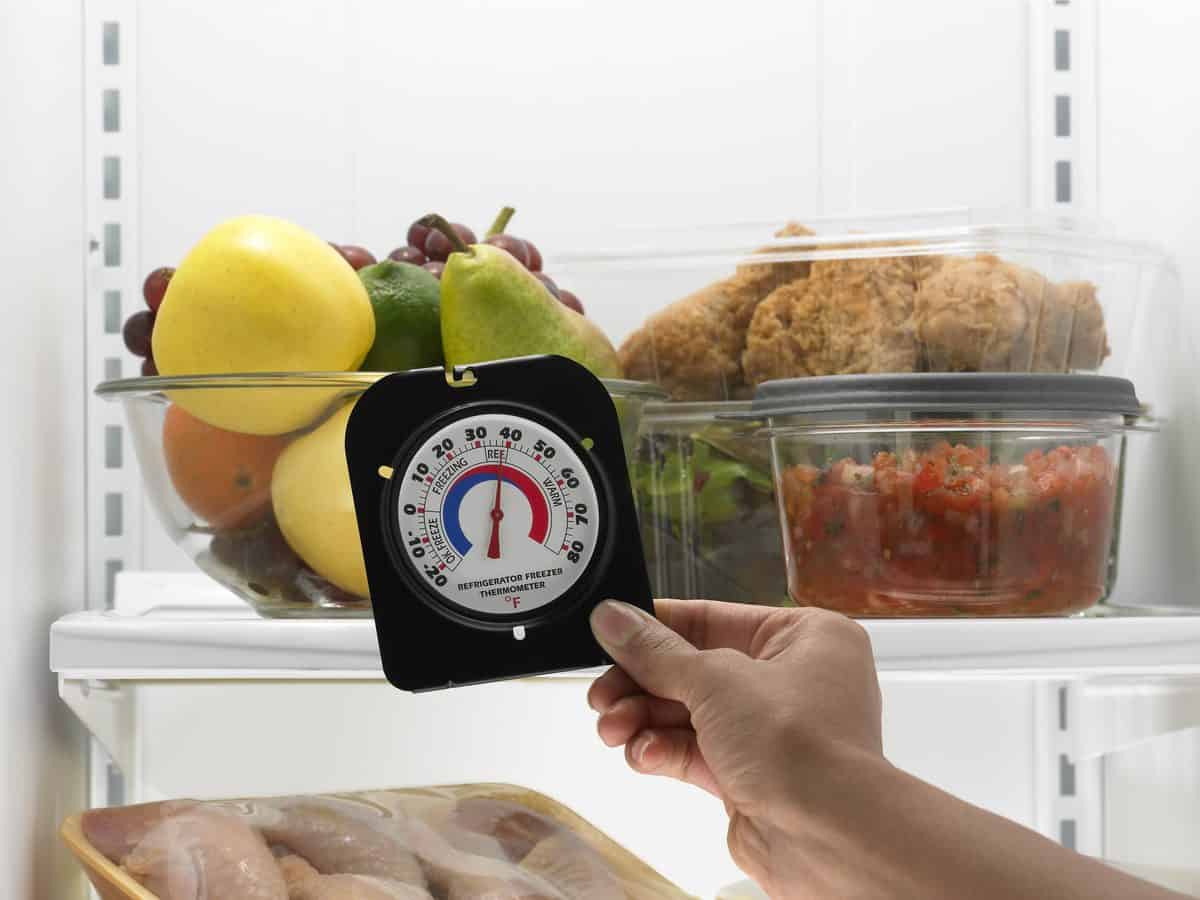
Before a forecast storm, freeze containers of water to fill empty freezer space and to serve as ice later. Freeze leftovers you will not need immediately. Group foods in the freezer so they hold cold longer. Have coolers ready before the power fails, not after the fridge has already warmed.
After power returns, check appliance thermometers first. If the freezer stayed at 40°F or below, food may be refrozen. If you lack a thermometer, check packages for ice crystals. Refrigerated perishable foods — meats, poultry, fish, eggs, milk, leftovers, and similar items — are the first to go after more than about four hours without power. Use the official charts rather than memory when you are sorting a full fridge.
Flood, Fire, and Chemical Contamination
After a flood, do not eat food that may have touched flood or stormwater. Discard food in non-waterproof packaging, cardboard juice/milk/baby formula boxes, and containers with screw caps, snap lids, crimped caps, twist caps, flip tops, or snap tops. Discard home-canned foods that contacted floodwater — they cannot be safely disinfected. Discard bulging, opened, or damaged cans.
Follow one complete official salvage procedure — do not invent bleach math or mix recipes. Intact commercial metal cans and retort pouches may be salvageable after cleaning and sanitizing, but agencies publish different bleach strengths for the same can/pouch task and for utensils or counters. Do not blend those figures into a homemade strength, and do not use can-salvage or surface mixes as drinking-water treatment (water disinfection uses a different dose on official pages).
Pick one agency page for the exact task and follow every wash–rinse–sanitize–air-dry step on that page:
- Can / retort pouch salvage (CDC, FoodSafety.gov, FDA): after cleaning, soak in about 1 cup (8 oz / 240 mL) unscented household bleach in 5 gallons of water for 15 minutes, or boil for 2 minutes.
- Can / retort pouch salvage (USDA FSIS): after cleaning, soak in 1 tablespoon unscented liquid chlorine bleach per gallon of drinking water for 15 minutes, or boil for 2 minutes.
- Many utensil / counter steps (FSIS / FDA): about 1 tablespoon bleach per gallon (see the page for soak time and air-dry).
- CDC flooded food-contact surfaces: wash, rinse, then the 1 cup / 5 gallon mix with the soak time on that page, then air-dry. Throw out wooden cutting boards, baby bottle nipples, and pacifiers that touched floodwater.
When in doubt, boiling for 2 minutes (where the page offers that option for metal cans/pouches) or discarding the food is safer than guessing a bleach recipe. Full steps:
Fire and smoke
FSIS says to discard all food that has been near a fire. Heat, smoke fumes, and fire-fighting chemicals can contaminate food, including food in refrigerators and freezers because seals are not airtight. Chemicals cannot simply be washed off food packages the way some people hope.
Appliances after floodwater
If a refrigerator or freezer was submerged even partially, FSIS says it is unsafe to use and must be discarded.
Cooking Without Power (Carbon Monoxide Warnings)
Commercially canned food may be eaten cold out of the can (Ready.gov Food). If you warm a can, follow Ready.gov’s listed steps on that page: remove the label, wash and disinfect the can using the dilution Ready.gov prints there, and open the can before heating. Do not substitute a flood-salvage bleach mix for that can-heating step.
Never use generators, charcoal grills, or camp stoves indoors. Carbon monoxide is colorless and odorless and can kill without much warning (CDC Carbon Monoxide Poisoning Basics).
- Charcoal grills and camp stoves are for outdoor use only (Ready.gov Food).
- Generators and fuel belong outdoors, at least 20 feet from windows, doors, and attached garages (Ready.gov Power Outages; CDC).
- Never run a generator inside a home or garage, even if doors and windows are open (CDC).
- Never burn charcoal indoors. Never use a portable gas camp stove indoors (CDC).
- Never use a gas stove or oven to heat your home (Ready.gov; CDC).
- Install carbon monoxide detectors with battery backup on every level, near sleeping areas.
Ready.gov lists some alternative warming ideas such as candle warmers, chafing dishes, fondue pots, or a fireplace. Those are not a loophole around outdoor-only rules for charcoal grills and camp stoves. Treat any flame or fuel indoors cautiously, keep fire and carbon monoxide safety first, and when in doubt eat safe commercial canned food cold.
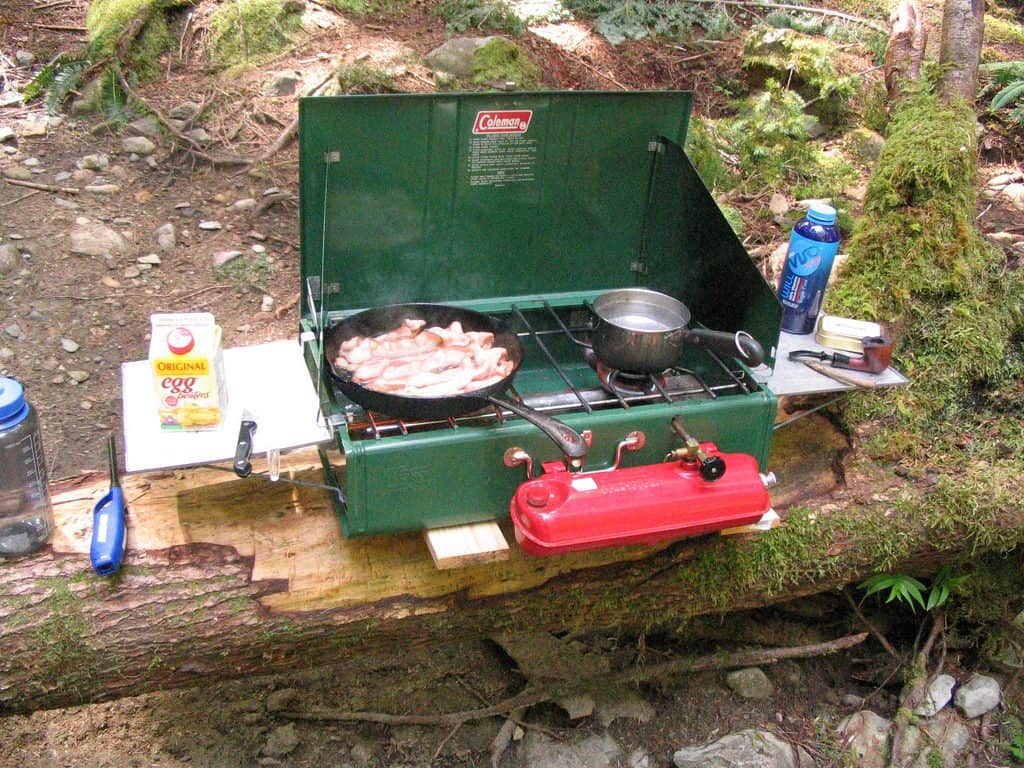
If you own a generator, place it outdoors on a dry surface, far from openings, and let it cool before refueling. Ready.gov warns that fuel spilled on hot engine parts can ignite, and that touching a wet generator can cause shock. Use heavy-duty extension cords rated for the load. A generator is not a kitchen appliance for the dining room.
Matches in a waterproof container appear on Ready.gov’s additional supplies list for kits. Fire safety still comes first. Keep extinguishers accessible, and never leave outdoor cooking unattended around kids, dry grass, or overhanging eaves.
Sanitation
Keep food in covered containers and keep cooking and eating utensils clean (Ready.gov). Do not let garbage pile up indoors — it is both a sanitation and fire problem.
After flooding, clean and sanitize dishes, utensils, and food-contact surfaces. CDC describes a wash, rinse, sanitize, and air-dry sequence, and says to throw out wooden cutting boards, baby bottle nipples, and pacifiers that contacted floodwater because they cannot be reliably cleaned of flood contaminants.
Evacuation and Grab-and-Go Food
Ready.gov recommends kit locations at home, work, and in the car. A work kit should cover at least 24 hours. For a fast exit, prioritize ready-to-eat food, a manual can opener, water, medications, infant and pet needs, and disposable utensils.
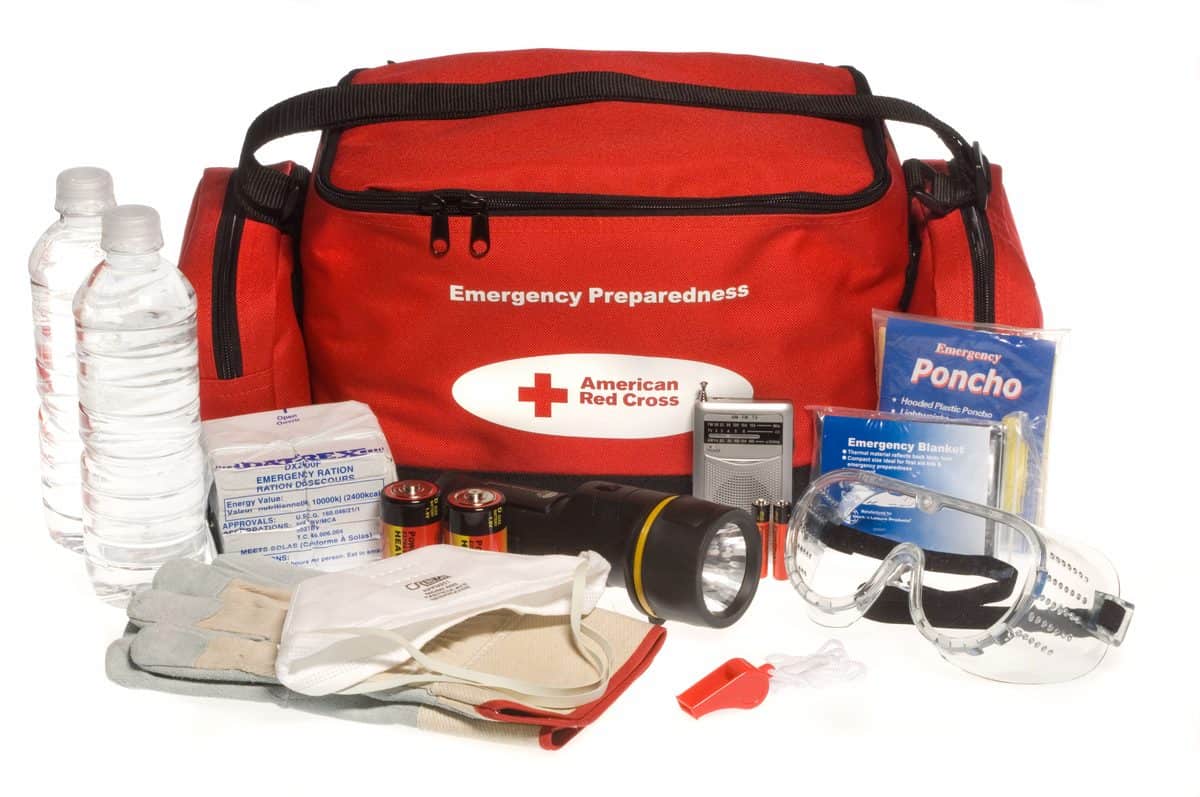
If you must move perishable food, keep it at 40°F or below in a cooler with ice or frozen gel packs, and put raw meat on the bottom to avoid drips. Perishable food left out more than 2 hours (1 hour above 90°F) should be discarded (FoodSafety.gov / FDA timing rules).
Printable Emergency Food Checklist
Print this section and tick items off. Everything here maps to the guide above.
Core food (Ready.gov list)
- ☐ Ready-to-eat canned meats, fruits, vegetables
- ☐ Manual can opener
- ☐ Protein or fruit bars
- ☐ Dry cereal or granola
- ☐ Peanut butter
- ☐ Dried fruit
- ☐ Canned juices
- ☐ Non-perishable pasteurized milk
- ☐ High-energy foods
- ☐ Comfort / stress foods you will eat
Water and tools
- ☐ Water plan: 1 gallon per person per day for several days
- ☐ Extra water for pets
- ☐ Eating utensils / mess kit
- ☐ Appliance thermometers (fridge and freezer)
- ☐ Cooler + ice / gel packs
- ☐ Unscented household bleach for cleaning (follow official ratios)
Infants, medical, pets
- ☐ Infant formula (check Use-By), bottles
- ☐ Allergy-safe and medical-diet foods
- ☐ Prescriptions and a power-outage med plan
- ☐ Pet food and pet water
Cooking and CO safety
- ☐ Outdoor-only grill or camp stove, if you use one
- ☐ Fuel stored safely outdoors / per label
- ☐ Generator only outdoors, ≥20 ft from openings
- ☐ CO detectors with battery backup
Storage and rotation
- ☐ Cool, dry, dark location away from chemicals
- ☐ Shelves above likely flood level
- ☐ Airtight containers for boxed foods
- ☐ Dates labeled; FIFO rotation
- ☐ Yearly kit review
Before a forecast outage
- ☐ Freeze water jugs / gel packs
- ☐ Know where to buy block or dry ice
- ☐ Group food in the freezer
- ☐ Charge phones / battery banks
Food Waste, Spoilage Loss, and Replenishing
Rotating storage into weeknight meals prevents dumping wholesome food because a quality date passed. FSIS notes that confusion about date labels drives unnecessary waste, and that foods past a “Best if Used By” date can still be wholesome if handled properly and not spoiled.
After an outage or disaster, discard unsafe food promptly rather than tasting it. Clean and sanitize the fridge if needed, then restock water and the staples you used. Do another full kit review at least yearly.
Frequently Asked Questions
How many days of food do official sources say to keep?
FoodSafety.gov says at least 3 days. Ready.gov says at least a several-day supply of non-perishable food. This guide treats those as the short-term floor. Longer pantries are optional household goals.
Do I need freeze-dried buckets, or will grocery canned food work?
Grocery non-perishables work. FoodSafety.gov says it is not necessary to buy dehydrated or other specialty emergency food for an emergency supply.
Can I eat food after the “Best if Used By” date?
For most foods, that date is about quality, not safety. Infant formula is the major exception: do not use it after its Use-By date (FSIS). Always discard spoiled or temperature-abused food.
How long is fridge and freezer food safe in a blackout?
About 4 hours in an unopened refrigerator; about 48 hours in a full freezer; about 24 hours in a half-full freezer, if doors stay closed. Confirm with thermometers and the FoodSafety.gov charts.
Are oxygen absorbers and Mylar bags safe for any food?
No. They are for thoroughly dry foods. USU Extension warns that moist foods in oxygen-reduced packaging can create a botulism risk and calls for about 10% moisture or less with absorbers.
Can I run a generator or grill in the garage if the door is open?
No. CDC says never use a generator inside a home or garage even with doors and windows open. Keep generators outdoors at least 20 feet from openings. Grills and camp stoves are outdoor-only.
What food must I throw away after a flood?
Anything that may have touched floodwater that is not in an intact commercial metal can or retort pouch — including home-canned food and most capped jars and cardboard packages. Follow CDC / FDA / FSIS discard and salvage pages.
Can this guide teach me to can meat or vegetables at home?
No. Use current USDA / NCHFP tested processes only. This article will not provide canning recipes.
How do I feed infants or pets during an outage?
Keep formula within Use-By dates, prefer ready-to-feed when possible, and follow Ready.gov water guidance for mixing. Keep pet food and extra water. Use FoodSafety.gov charts for opened formula after temperature abuse.
How does this connect to emergency water storage?
You need both. Start with the water gallon-per-day floor and treatment rules in our Ultimate Guide to Water Storage.
If you only do three things after reading: (1) put a several-day shelf of familiar non-perishables and a can opener in one marked bin, (2) put appliance thermometers in the fridge and freezer, and (3) place carbon monoxide detectors with battery backup and keep all combustion cooking and generators outdoors. Then add water storage and rotation habits from the water guide.
Sources
Primary references opened for this guide include:
- Ready.gov Food
- Ready.gov Build a Kit
- Ready.gov Power Outages
- Ready.gov Low and No Cost Preparedness
- USDA FSIS: Keep Food Safe During Emergencies
- USDA FSIS: Food Product Dating
- FoodSafety.gov: Food Safety in a Disaster or Emergency
- FoodSafety.gov: Food Safety During Power Outage charts
- FDA: Food and Water Safety During Power Outages and Floods
- CDC: Keep Food Safe After a Disaster or Emergency
- CDC: Carbon Monoxide Poisoning Basics
- NCHFP: Packaging and Storing Dried Foods
- NCHFP: “Dry Canning” Isn’t Canning
- NCHFP: Botulism: Think Outside the Jar
- USU Extension: 7 Factors That Prolong Your Food Storage Supply
- USU Extension: Packaging Foods
- USU Extension: Food Storage Booklet (PDF)
- Survival Know How: Ultimate Guide to Water Storage
This guide is for general household preparedness education. It is not medical, legal, or personalized nutrition advice. When local emergency officials issue instructions, follow those first.