
The short answer: in cold, wet, or windy conditions, get out of the weather and insulate yourself from the ground before you worry about a fancy meal. At home without heat or power, close off unused rooms, dress in layers, and never run generators, grills, or camp stoves indoors — carbon monoxide kills. A body temperature below 95°F is a medical emergency (Ready.gov Winter; CDC; MedlinePlus).
This guide covers wilderness emergency shelters, ground insulation, clothing layers, staying warm at home when the power fails, heater and generator safety, hypothermia and frostbite recognition, vehicle stranded steps, kids and pets, and a printable checklist. It is practical household and field preparedness — not a mountaineering course or a substitute for emergency medical care.
Pair it with our Ultimate Guide to Water Storage and Ultimate Guide to Emergency Food. When local officials issue instructions, follow those first.
Disclosure: Survival Know How is a participant in the Amazon Services LLC Associates Program. Links to Amazon use our affiliate tag bugoutbro-20. Buttons below open Amazon search pages for product types only — not endorsements of specific brands, prices, or ratings.
Jump to:
Quick picks: sourced cold-safety numbers
Why Emergency Shelter and Staying Warm Matter
Winter storms raise the risk of car accidents, hypothermia, frostbite, carbon monoxide poisoning, and heart attacks from overexertion (Ready.gov Winter). Power can fail for hours or days, cutting heat and communication.
Outdoors, wet clothing and wind strip heat fast. The U.S. Forest Service reminds campers to stay dry because wet clothes contribute to heat loss, and never to use a flame or heating device inside a tent (USFS Camping).
This guide treats shelter as both a wilderness skill and a household skill: get out of wind and wet, keep your core warm, and refuse unsafe heat shortcuts that create carbon monoxide.
Rule of Threes and Survival Priorities
FEMA’s National Urban Search & Rescue training appendix on survival lists a plain “Rule of 3’s”: you may die in about 3 minutes without air, about 3 hours without shelter in harsh conditions, about 3 days without water, and about 3 weeks without food (FEMA US&R Appendix B). Treat those as priority reminders, not precise medical timers.
Rule of 3’s (FEMA US&R Appendix B)
After you have shelter and dry layers, water and food still matter. Use the water and food guides for storage and discard rules rather than inventing new numbers here.
Outdoor Site Selection
Arrive with enough daylight to inspect the whole site (USFS). Look for a level, well-drained spot with room for gear. Trees or shrubs on the windward side help block gusts.
Avoid flood channels, washes, troughs, and low depressions. Watch for avalanche slopes, overhanging dead limbs, trees that could blow down, and rock that could collapse (FEMA Appendix B; USFS hazard checklist). Check for glass, sharp objects, insect nests, poison plants, and wildlife dens.
Keep open fires and fuel-burning appliances far enough from tents and debris shelters that sparks and heat cannot ignite them. Never use a flame or any other heating device inside a tent (USFS). Smaller shelters waste less body heat (FEMA Appendix B).
Outdoor Shelter Types Compared
Pick the simplest option that gets you dry and out of the wind. Natural cover is temporary. Purpose-built debris, lean-to, tarp, or (last resort) snow shelter options trade time, materials, and skill.
| Type | Best for | Limits | Heat source |
|---|---|---|---|
| Natural feature (overhang, dense evergreens) | Fast cover while you build or wait | Rockfall, drip lines, animals; inspect hazards | Body heat; keep fire outside and distant |
| Debris hut | No tarp; cold nights with lots of dry debris | Labor; wet debris fails; practice first | Body heat in a small cavity (FEMA Appendix B) |
| Lean-to / windbreak | Quick wind protection; signaling fire nearby | Open side; rain and wind still reach you | Body heat; optional careful outdoor fire (NWS) |
| Tarp / plastic sheet | Speed when you carry cord and a sheet | Needs anchors; condensation on walls | Body heat; no heaters under fabric |
| Snow shelter (cave / trench concepts) | No other cover in deep snow (NWS mentions snow cave) | Collapse, avalanche terrain, ventilation; keep conceptual here | Body heat only — no combustion inside |
| Commercial tent / bivy | Planned trips; flame-retardant fabric | Still needs dry ground insulation | Body heat; never flame devices inside (USFS) |
Debris Hut
FEMA’s survival appendix calls the debris hut the simplest built shelter: prop a strong ridgepole on a stump, log, or rock; lean ribbing along both sides; add a lattice of finer sticks; then heap light, dry, airy debris (FEMA US&R Appendix B).
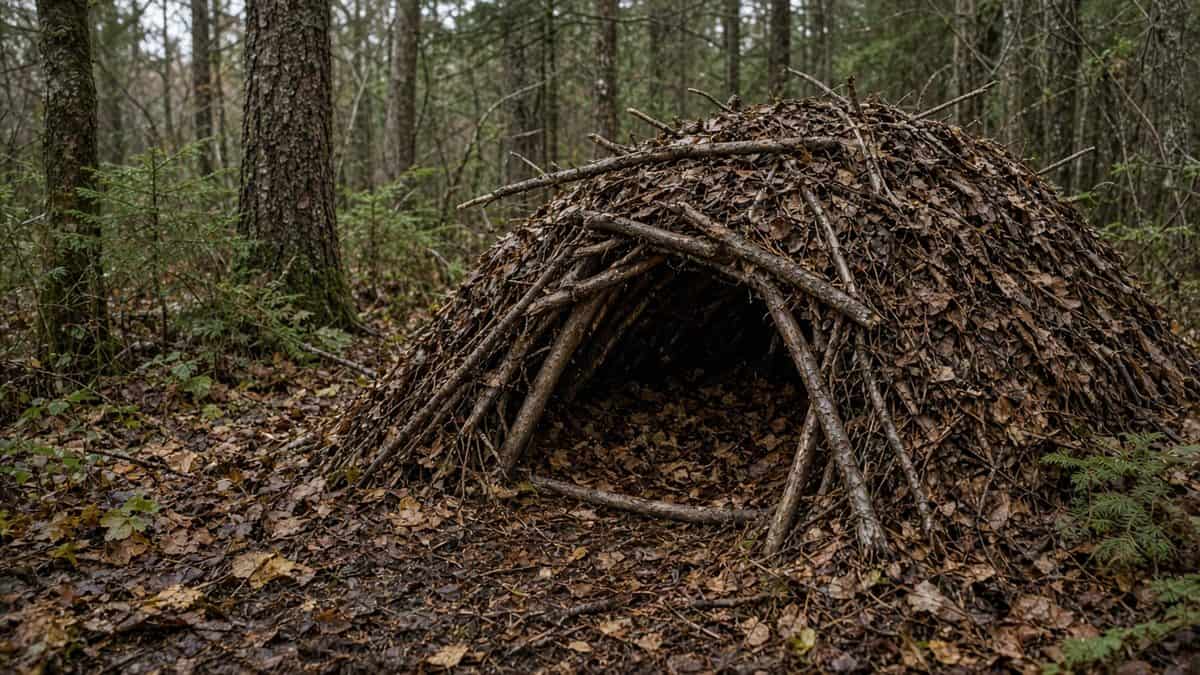
Work your arm through the debris to the ribbing. Debris should reach your armpit. In cold weather, add another foot or two of debris (FEMA US&R Appendix B wording). Keep the interior just large enough for your body so you are not heating empty air.
No tarp nights
Time and moisture
Lean-To and Windbreak
If you are caught outside with no shelter nearby, the National Weather Service says to build a lean-to, windbreak, or snow cave for protection from the wind, and to build a fire for heat and to attract attention. Place rocks around the fire to absorb and reflect heat (NWS).
Orient the open side away from the strongest wind when you can. Keep flames and sparks far from debris and fabric. Attend every fire, clear to bare mineral soil where required, and drown fires completely when you leave (USFS).
A lean-to is open by design. It is wind protection, not a sealed cabin. Pair it with dry ground insulation and layers, not with indoor-style heaters.
Tarp and Plastic Sheet Configurations
A tarp or heavy plastic sheet plus cordage is faster than a debris hut when you packed the gear. FEMA’s survival essentials list includes about 50 feet of nylon cord and a 6×6 foot plastic sheet (FEMA Appendix B).
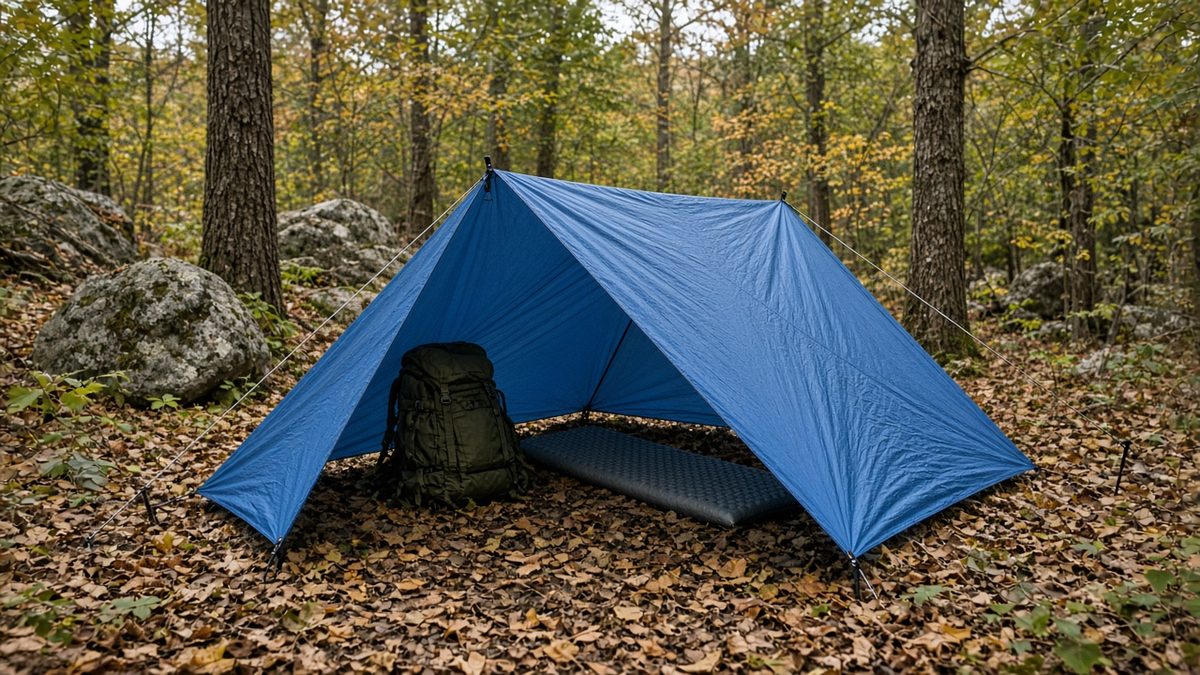
Common pitches: lean-to (one edge low to the ground), A-frame / ridgeline, and a low-and-tight storm pitch that drops the windward side. Drain rain away from your bed. Keep gear off wet walls where condensation forms. Anchor with stakes, rocks, or buried sticks.
Snow Shelters (High-Level Only)
Keep this section conceptual. NWS lists a snow cave as an option when no other shelter exists. Detailed wall-thickness recipes from blogs are not treated as federal guidance in this article. Prefer a commercial winter tent or bivy plus ground insulation when you have them.
- Avoid avalanche slopes, cornices, gullies, and obvious runout zones (FEMA Appendix B hazard theme; winter travel caution).
- Enclosed snow shelters need ventilation. Never use camp stoves, charcoal, or heaters inside sealed snow shelters or tents — carbon monoxide and fire risk (CDC CO guidance; USFS tent rule).
- Collapse is a real hazard. Keep digging tools accessible and do not treat a snow shelter as “set and forget.”
Stay dry, cover exposed skin, and melt snow for drinking water rather than eating unmelted snow, which lowers body temperature (NWS; CDC).
Insulation From the Ground
Cold ground steals heat by conduction. FEMA’s appendix says insulation between the ground and the body is essential, and that almost any light, dry, airy debris in a pile can help. Plastic sheeting can serve as a moisture barrier under that insulation (FEMA Appendix B).
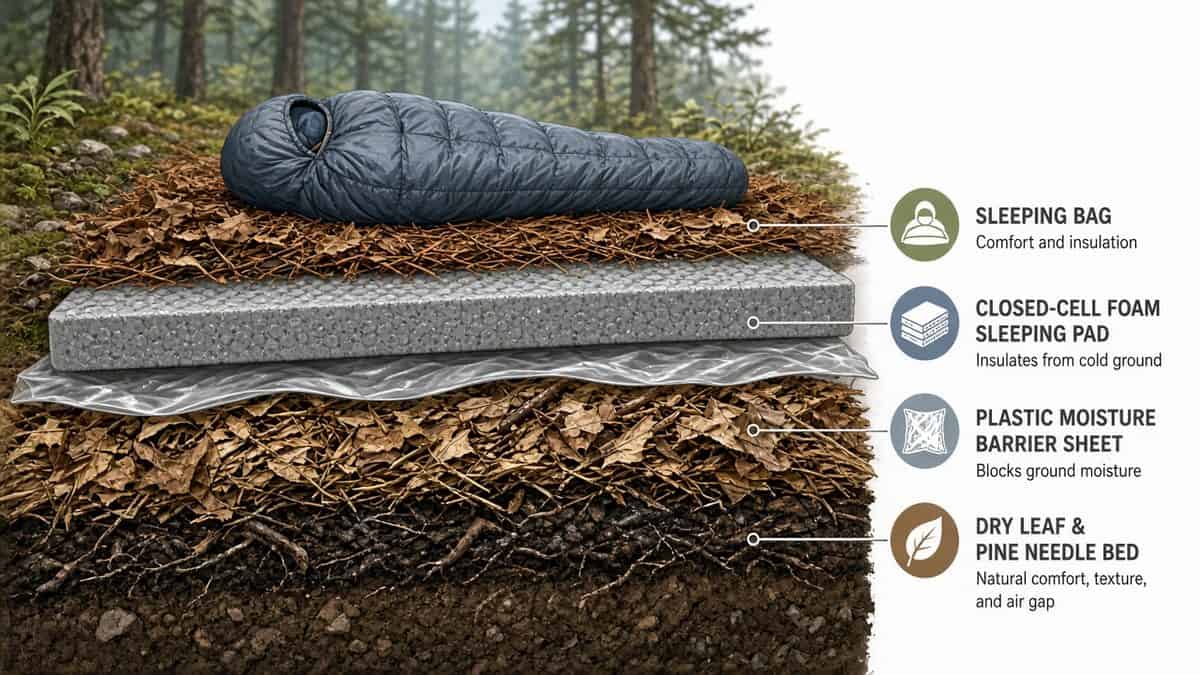
MedlinePlus first-aid guidance also notes that if you cannot get indoors, get out of the wind and use a blanket or natural material such as branches, pine needles, or leaves for insulation from the cold ground (MedlinePlus Hypothermia).
Clothing Layers and Staying Dry
Dress in several layers of loose clothing. Layering traps air and lets you shed layers before you sweat, then chill (CDC; Ready.gov).
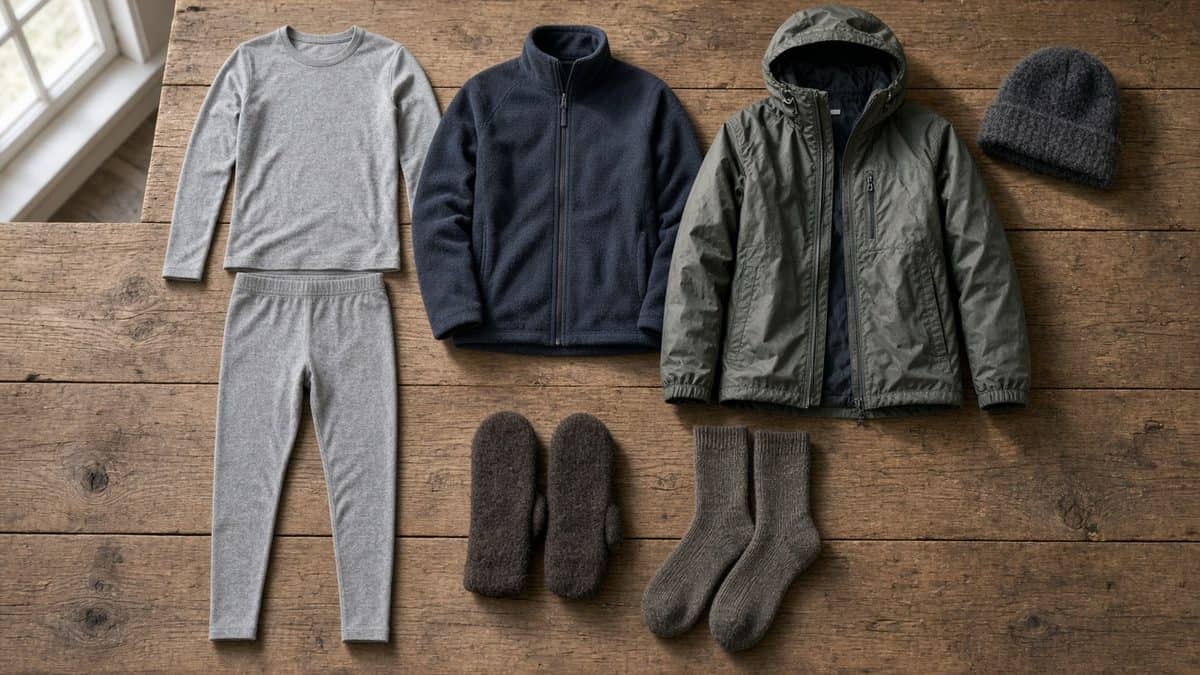
| Layer (CDC) | What to wear |
|---|---|
| Inner | Fabrics that hold body heat and do not absorb moisture as readily as cotton — wool, silk, or polypropylene |
| Insulation | Wool, goose down, or fleece to trap air |
| Outer | Tightly woven, preferably water- and wind-resistant shell |
Cover extremities
Hat, scarf or knit mask, mittens (warmer than gloves), water-resistant coat and boots, sleeves snug at the wrist (CDC).
Stay dry
Wet clothing chills you quickly. Remove layers when you feel too warm. Do not ignore shivering — get to shelter (CDC).
Alcohol and caffeine are not warming strategies. CDC advises against alcoholic or caffeinated drinks when you are trying to stay warm; NWS notes alcohol can lower body temperature and reduce shivering.
Sleep Systems and Emergency Bedding
CDC lists extra blankets, sleeping bags, and warm winter coats among heat sources that help when power fails (CDC). Keep sleeping bags dry (USFS).
An emergency “space” blanket appears on FEMA’s survival essentials list. Treat it as a reflective aid and wind layer, not a full sleep system by itself (FEMA Appendix B). Stack closed-cell foam, dry debris, and blankets under you.
Staying Warm at Home With No Power
Make a plan now for how you will stay warm if heat or power fails. Identify a nearby warming center and how you will get there (Ready Stay Safe and Warm toolkit).
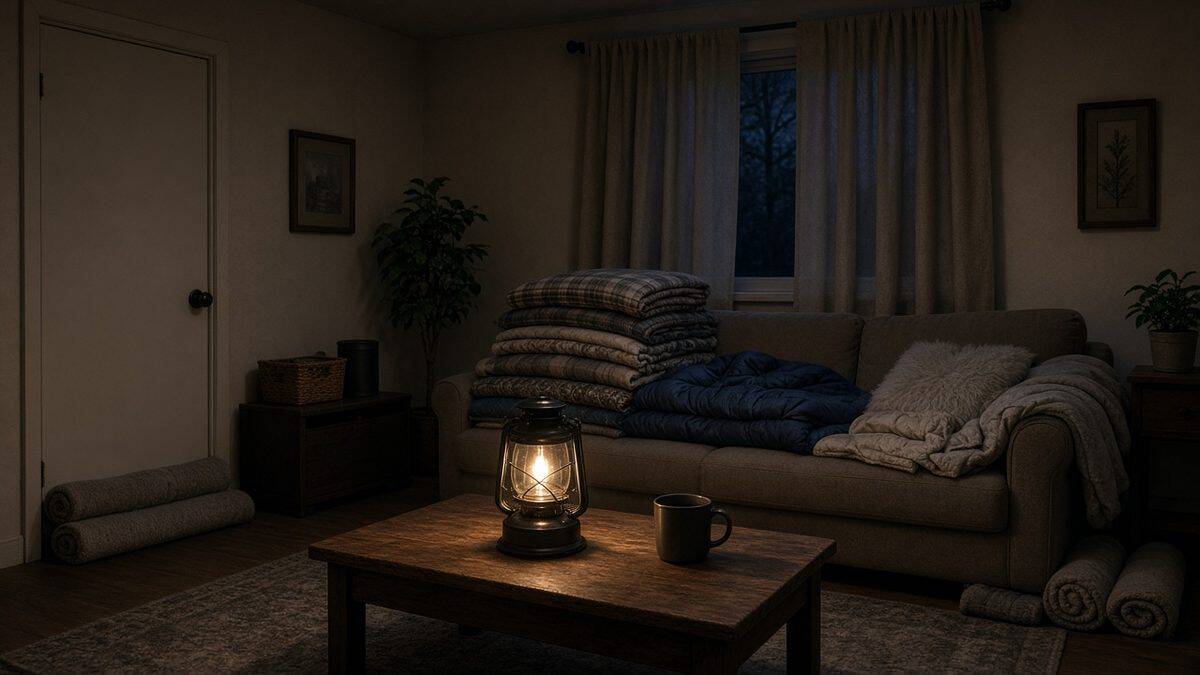
Close unused rooms
Close vents and shut doors in rooms you are not using (Ready toolkit). Stuff towels or rags in cracks under doors (NWS; Ready toolkit).
Manage windows
Open blinds or curtains on sunny windows by day; close them at night to hold heat (Ready toolkit). NWS also notes closing blinds or curtains when heat is out.
Dress and hydrate
Wear layers of loose clothing. Eat and drink; prefer non-caffeinated, non-alcoholic fluids (NWS; CDC).
Pipes
In extreme cold, drip taps, open cabinet doors so heat reaches pipes, and never thaw frozen pipes with a torch — use warm air such as from a hair dryer if power allows (CDC).
If your home becomes too cold to stay safe — especially with infants, older adults, or power-dependent medical needs — leave for a friend, library, or community warming center (Red Cross; Ready.gov Power Outages).
Safe Heating, Generators, and Carbon Monoxide
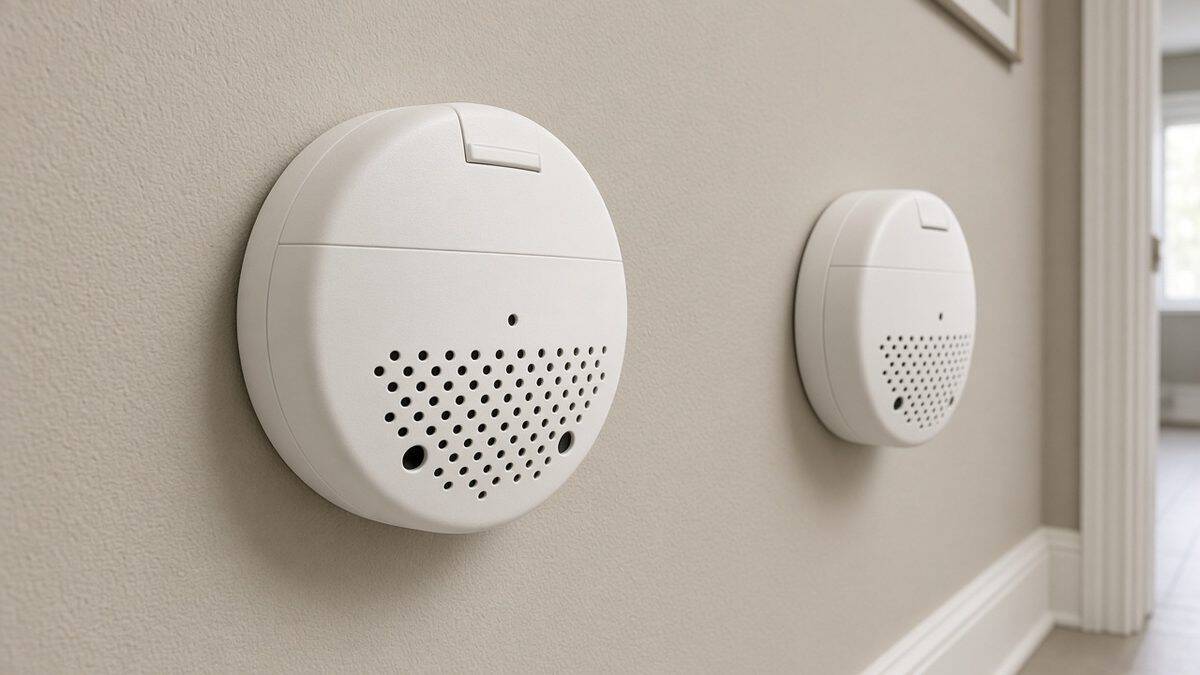
Carbon monoxide is colorless and odorless. It can kill you, your family, and pets. Never use a gas stove or oven to heat your home. Never run generators, charcoal grills, or camp stoves inside a home, basement, garage, tent, or camper — even with a door or window open (Ready.gov; CDC; Red Cross).
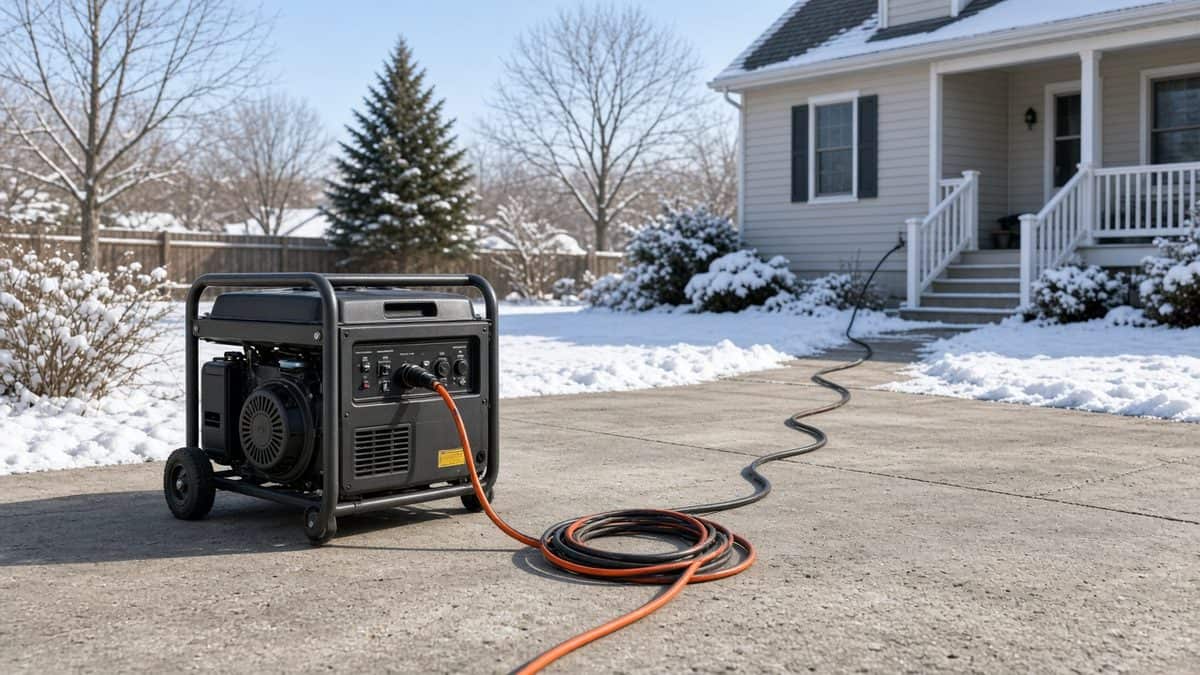
≥20 feet outdoors
- Outdoors only, at least 20 feet from windows, doors, and attached garages
- Keep dry; use heavy-duty outdoor-rated cords
- Let cool before refueling
- Follow the manufacturer’s instructions (Ready.gov)
3-foot rule
- Keep at least 3 feet from drapes, furniture, bedding
- Prefer electric units with tip-over / auto shut-off
- Plug into a wall outlet — avoid extension cords
- Never leave children unattended nearby (CDC; CPSC)
Vent outdoors
- Use only if properly vented; open the flue
- Keep burnables at least 3 feet from open flame
- Annual professional service of heating systems (CDC; Ready toolkit; Red Cross)
Extra limits
- Ask your local fire department whether kerosene heaters are legal (CDC)
- Never use flame or heating devices inside a tent (USFS)
- Prefer flashlights and lanterns over candles (CDC; Red Cross)
Hypothermia and Frostbite
This section summarizes public first-aid pages from Ready.gov, CDC, NWS, and MedlinePlus. It is not a substitute for calling 911 or professional care.
| Hypothermia | Frostbite | |
|---|---|---|
| What it is | Dangerously low body temperature; below 95°F is an emergency | Freezing injury, often nose, ears, cheeks, chin, fingers, toes |
| Adult signs | Shivering, exhaustion, confusion, fumbling hands, memory loss, slurred speech, drowsiness (Ready.gov / CDC). Shivering may stop when severe (MedlinePlus). | Numbness; white or grayish-yellow skin; firm or waxy feel (Ready.gov / CDC) |
| Infants | Bright red, cold skin; very low energy (CDC) | Same tissue signs on exposed areas — seek care |
| Do | Get medical help. Move to warm shelter. Remove wet clothes. Warm the center of the body first — chest, neck, head, groin. Wrap in dry blankets including head and neck (Ready.gov). Warm sweet nonalcoholic fluids only if alert and can swallow (MedlinePlus). | Seek care. Warm with warm (not hot) water or body heat. Protect from refreezing. |
| Do not | Do not use heating pads, heat lamps, or hot water directly. Do not give alcohol. Do not assume a motionless cold person is dead (MedlinePlus). | Do not massage. Do not use fireplace, radiator, stove, heating pad, or electric blanket on numb skin. Do not walk on frostbitten feet unless necessary (CDC PDF / Ready.gov). |
Hypothermia can occur above 40°F if a person is wet and chilled (CDC). Get help early when confusion or poor coordination appear.
If You Are Trapped in a Vehicle
Stay inside the vehicle if you are stuck in a winter storm. Leaving can lead to disorientation in wind-driven snow (Ready.gov; NWS; CDC).
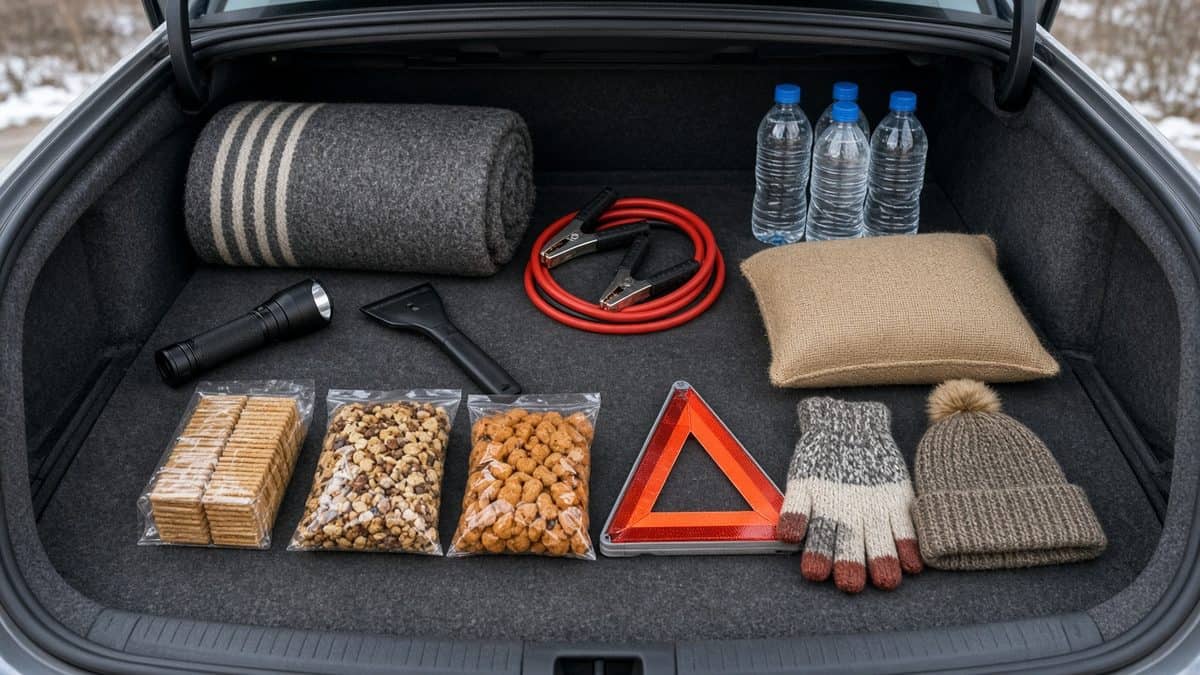
- Run the motor about 10 minutes each hour for heat
- While the engine runs, open a window a little for fresh air
- Clear snow from the exhaust pipe to reduce carbon monoxide risk
- Tie a bright cloth to the antenna or door; use the dome light at night when the engine runs; raise the hood after snow stops (NWS)
- Move trunk supplies into the cabin; wrap your body including your head; stay awake; move arms and legs periodically (CDC)
- Do not eat snow (NWS; CDC)
Kids, Older Adults, and Pets
Infants under one year should never sleep in a cold room. Dress them in warmer sleep clothing such as footed pajamas or wearable blankets; remove pillows and soft bedding that raise smothering and SIDS risk. If you cannot keep the home warm, arrange to stay elsewhere. Body heat can warm a baby in an emergency, but take precautions against rolling onto or smothering the infant (CDC).
Older adults often make less body heat. Check on older friends and neighbors, and if you are over 65, check your indoor temperature often during extreme cold (CDC). NWS notes seniors are a high share of hypothermia deaths and may not shiver effectively.
Plan for pets before you need a warming center — many centers do not allow pets. Call ahead; your local humane society may have options (Ready toolkit). Keep pet food and extra water with your household kit.
For refrigerated medicines and power-dependent devices, make a clinician plan before storms. Ready.gov says if power is out more than a day, discard refrigerated medication unless the label says otherwise, and consult a pharmacist or doctor.
When to Leave for a Warming Center
If you cannot keep your house warm, go to a community warming center. Check your local emergency management website, or call 211 for help locating services (Ready toolkit). During active disasters, the FEMA app lists open shelters (Ready.gov Evacuation).
Leave early enough that travel is still possible. Extreme cold plus medical vulnerability is a reason to relocate before anyone collapses from hypothermia.
Printable Shelter and Warmth Checklist
Print this section and tick items off. Buttons open Amazon search pages for product types only — compare options yourself.
Wear
- ☐ Non-cotton base layers
- ☐ Insulating midlayers (fleece / wool)
- ☐ Waterproof / wind shell
- ☐ Hat, mittens, wool socks
- ☐ Waterproof boots
Sleep / ground
- ☐ Sleeping bag rated for your climate
- ☐ Closed-cell foam pad
- ☐ Extra blankets
- ☐ Emergency / mylar blankets
- ☐ Plastic sheet / ground barrier
Shelter build
- ☐ Tarp with grommets
- ☐ Cordage / paracord
- ☐ Stakes
- ☐ Knife or multi-tool
- ☐ Work gloves
Home cold outage
- ☐ CO alarms with battery backup (every level)
- ☐ Smoke alarms with battery backup
- ☐ Flashlights / lanterns + batteries
- ☐ Draft stoppers / plastic window film
- ☐ Indoor thermometer
- ☐ Warming-center address and 211 written down
Heat safety gear
- ☐ Electric space heater with tip-over shutoff (only if power available)
- ☐ Generator planned for outdoor ≥20 ft use only
- ☐ Heavy-duty outdoor extension cords
- ☐ Fireplace tools; flue / chimney inspection reminder
Car kit
- ☐ Blanket / sleeping bag
- ☐ Warm spare clothes
- ☐ Jumper cables, ice scraper, shovel
- ☐ Sand or cat litter, flashlight
- ☐ Water + non-perishable snacks
- ☐ Phone charger, map, reflective triangle
Signaling / navigation
- ☐ Whistle
- ☐ Headlamp
- ☐ Signal mirror
- ☐ Map and compass
Water and food cross-link
- ☐ Water plan from the water guide
- ☐ Non-perishable food + can opener from the food guide
- ☐ Outdoor-only cooking plan (no indoor combustion)
Frequently Asked Questions
What should I do first in a cold emergency — find food or build shelter?
Prioritize getting out of wind and wet and insulating from the ground. FEMA’s Rule of 3’s frames shelter ahead of water and food when exposure is immediate. Then secure water and food using the linked guides.
How do I stay warm at home during a power outage?
Close unused rooms, block drafts under doors, use sunny windows by day and close coverings at night, wear layers, and use only safe heat sources. If the home stays too cold, go to a warming center (Ready toolkit; NWS; Red Cross).
Can I use my oven or grill to heat the house?
No. Never heat your home with a gas stove or oven. Grills and camp stoves are outdoor-only (Ready.gov; CDC; Red Cross).
How far should a generator be from my home?
Outdoors, at least 20 feet from windows, doors, and attached garages. Never run one in a garage even with the door open (Ready.gov; CDC).
What are the warning signs of hypothermia?
Shivering, exhaustion, confusion, fumbling hands, memory loss, slurred speech, or drowsiness in adults; bright red cold skin and very low energy in babies. Below 95°F is an emergency (Ready.gov; CDC).
What should I avoid if someone has frostbite?
Do not massage the area or warm it with a fireplace, radiator, stove, heating pad, or electric blanket. Use warm (not hot) water or body heat and seek medical care (Ready.gov; CDC).
If my car is stuck in a blizzard, should I walk for help?
Usually no — stay with the vehicle unless a safe building is immediately reachable. Run the engine about 10 minutes per hour, clear the exhaust, and crack a window (NWS; CDC; Ready.gov).
How do I insulate myself from the cold ground outdoors?
Build a thick bed of dry debris and/or use a foam pad and plastic moisture barrier under your sleeping system (FEMA Appendix B; MedlinePlus).
Are snow caves safe?
They are a last-resort concept listed by NWS, with collapse, avalanche-terrain, and ventilation risks. This guide does not teach detailed snow-cave engineering. Prefer other shelter when possible, and never burn fuel inside.
Where can I find a warming center?
Check local emergency management sites, call 211, or use the FEMA app during disasters for open shelters (Ready toolkit; Ready.gov Evacuation).
How should I dress in layers for extreme cold?
Inner moisture-managing layer (wool/silk/polypropylene), insulating midlayer, and wind/water-resistant shell, plus hat, mittens, and covered extremities (CDC).
How does this guide connect to water and food storage?
Shelter and safe heat come first in exposure. Then follow the Ultimate Guide to Water Storage and Ultimate Guide to Emergency Food for gallons, discard rules, and outdoor-only cooking.
If you only do four things after reading: (1) pack a car winter kit and keep the tank more full in storm season, (2) install and test CO and smoke alarms with battery backup, (3) practice a one-room draft-stop plan and write down your warming-center options, and (4) put a tarp or plastic sheet, cord, foam pad, and spare dry layers where you can reach them. Then finish water and food readiness from the other Ultimate Guides.
Sources
Primary references opened for this guide include:
- Ready.gov Winter Weather
- Ready.gov Power Outages
- Ready.gov Car Safety
- Ready.gov Evacuation
- Ready.gov Stay Safe and Warm Toolkit (PDF)
- FEMA US&R Appendix B — Survival (PDF)
- CDC: Stay Safe During & After a Winter Storm
- CDC: Avoid Spot Treat Frostbite and Hypothermia (PDF)
- CDC: Protect Yourself During a Power Outage
- NWS: Caught in a Winter Storm
- NWS: During Extremely Cold Weather
- NWS: Wind Chill / Cold FAQs
- American Red Cross: Power Outage Safety
- American Red Cross: Carbon Monoxide
- American Red Cross: Winter Storm
- CPSC: Generators, Furnaces, Space Heaters
- U.S. Forest Service: Camping
- MedlinePlus: Hypothermia
- MedlinePlus: Frostbite
- Survival Know How: Ultimate Guide to Water Storage
- Survival Know How: Ultimate Guide to Emergency Food
This guide is for general preparedness education. It is not medical, legal, or wilderness-rescue certification. Follow local emergency officials when they issue instructions.