
The short answer: store at least one gallon of water per person per day for at least three days, and two weeks if you can, according to the CDC.
Keep it in sealed, food-grade containers, somewhere cool and dark, and replace water you bottled yourself every six months. Then learn how to treat water, because filtering alone does not make it safe.
This guide walks through every storage option, from a pocket filter up to a rain barrel, and links to our deeper articles along the way.
Jump to:
Quick picks: how much water to store
| Household and time | Water to store |
|---|---|
| Per person, per day | At least 1 gallon |
| Family of 4, 3 days | At least 12 gallons |
| Family of 4, 2 weeks | At least 56 gallons |
| Add extra | For pets, hot weather, illness or pregnancy |
Why Water Is Your First Priority in an Emergency
When a hurricane, flood or water main break hits, the tap is often the first thing you lose, or the first thing you can’t trust. The CDC notes that after an emergency your tap water may not be available or safe to use, and that unsafe water shouldn’t be used to drink, brush teeth, wash food, make ice or mix baby formula.
That’s why water sits at the top of every prepping list, ahead of food and gear. You need it to drink, cook and keep clean, and unlike most supplies it is heavy, bulky and slow to gather once a storm has arrived. Store it before you need it.
How Much Water to Store Per Person Per Day
The baseline from the CDC is at least 1 gallon per person, per day, for 3 days, and a 2-week supply if possible. That gallon covers drinking, cooking and brushing teeth.
The CDC suggests storing more for pregnant women, people who are sick, pets, and anyone in a hot climate.
Ready.gov’s water page adds that needs vary with age, health, activity and climate, so treat one gallon as a floor, not a target.
| Household and time | Water to store |
|---|---|
| Family of 4, 3 days | At least 12 gallons |
| Family of 4, 2 weeks | At least 56 gallons |
| Add extra | For pets, hot weather, illness or pregnancy |
Quick-Reference Table
Portable filter
Sealed water pouches
Jugs / stackable containers
Bathtub storage bag
55-gallon drum
Rain barrel
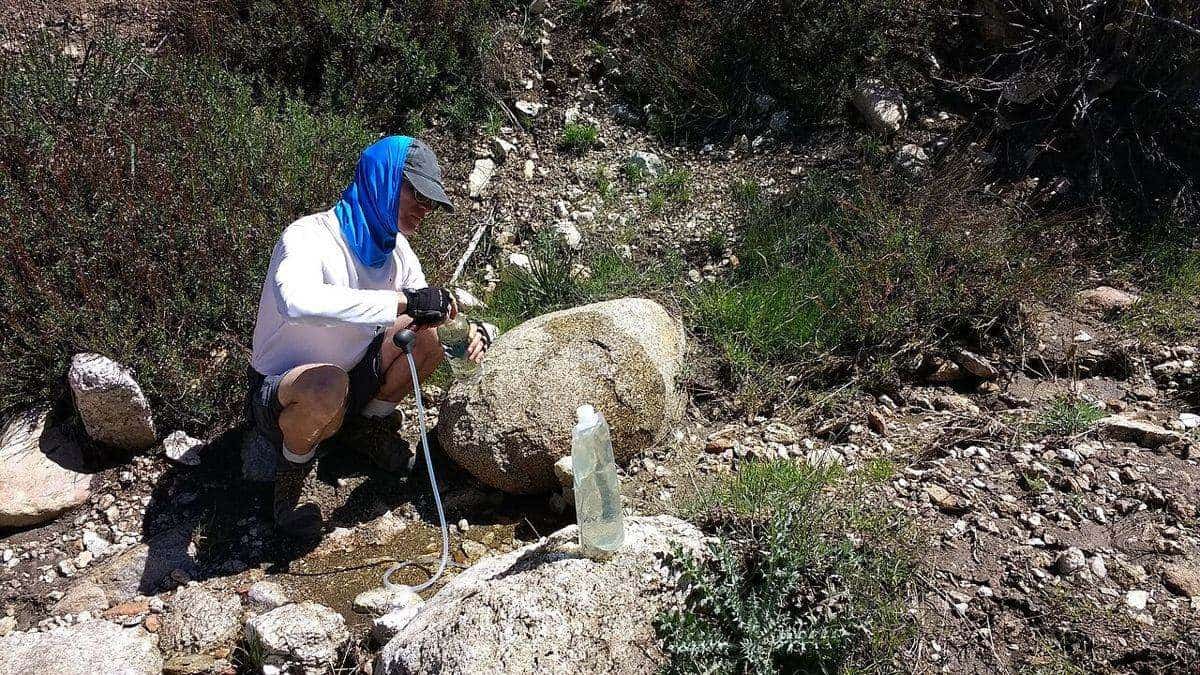
Portable Water Filters: The Smallest Step
A portable filter doesn’t store water; it lets you use water you find. It’s the cheapest and lightest place to start, and it belongs in every go-bag. We compared the two most popular options head to head in Sawyer Squeeze vs LifeStraw.
Know the limits. According to the CDC, portable filters will not remove viruses.
A filter needs an absolute pore size of 0.3 micron or smaller to remove bacteria and 1 micron or smaller to remove parasites like Giardia and Cryptosporidium. The CDC’s advice is to filter first, then disinfect the filtered water.
And no filter, boiling or disinfectant makes water with fuel or toxic chemicals safe.
Sealed Boxed Emergency Water Pouches
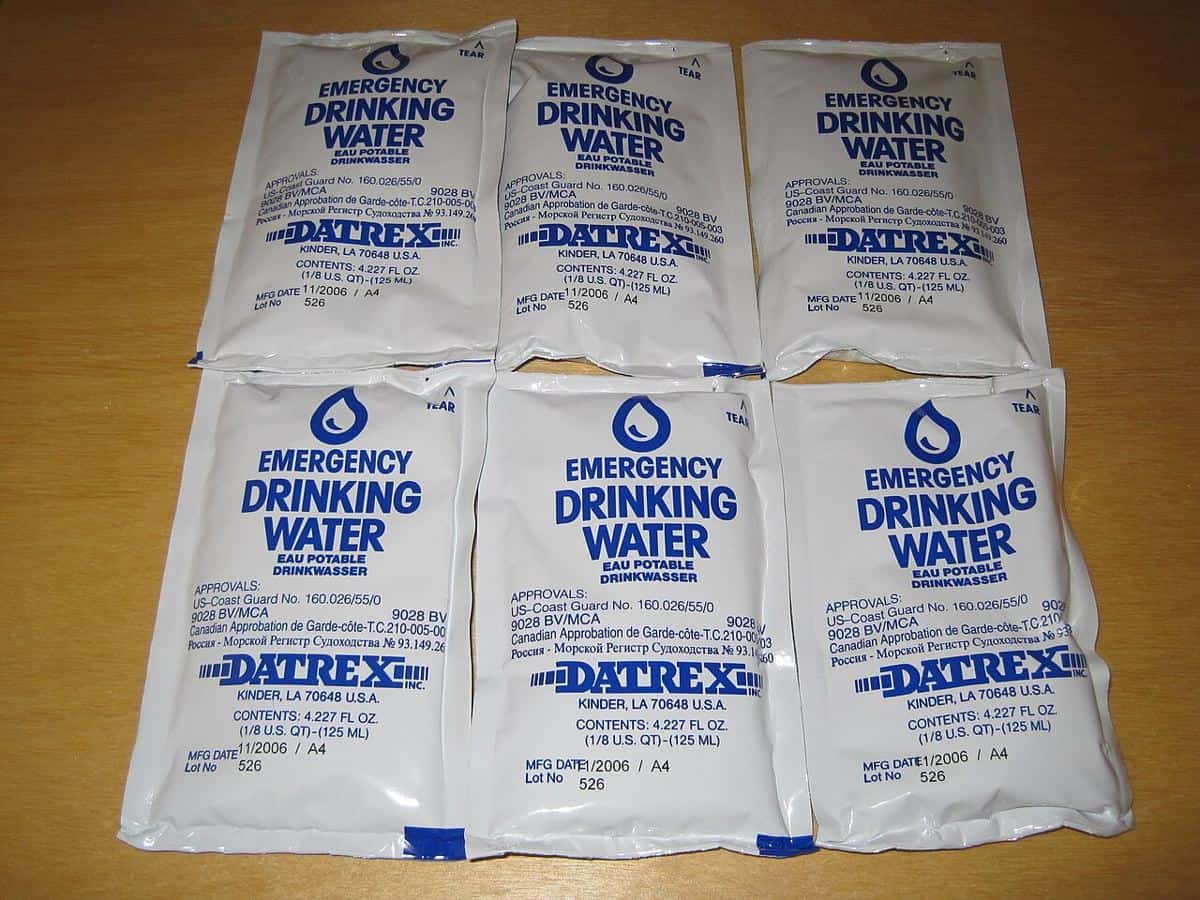
Emergency water pouches are small, sealed servings of drinking water, usually sold in boxes or cases. They’re built for go-bags, car kits and office drawers: flat, easy to pack, and ready to drink without any treatment.
The trade-off is volume. Each pouch holds only a small serving, so it takes a lot of them to reach one gallon per person per day.
Use them as a portable top-up, not your main supply. The CDC says to observe the expiration date on store-bought water, so check the date printed on the box and note it on your rotation list.
Jugs and Stackable Containers
This is where most households build their core supply. The CDC calls unopened, commercially bottled water the safest and most reliable source in an emergency, so cases of store-bought water are a perfectly good start.
If you fill your own containers, the CDC recommends FDA-approved food-grade containers. If that’s not possible, choose ones with a tight-closing top, a durable non-glass body and ideally a narrow opening for pouring.
Never reuse containers that held toxic chemicals such as bleach or pesticides. To prepare a container, the CDC’s steps are:
- Wash it with soap and rinse completely.
- Sanitize with 1 teaspoon of unscented liquid household chlorine bleach (5%–9% sodium hypochlorite) in 1 quart of water.
- Cap, shake so the solution touches every inside surface, and wait at least 30 seconds.
- Pour it out, let the container air-dry, then fill with clean water and cap tightly.
- Label it “drinking water” with the date.
Stackable containers make better use of closet and garage space than a jumble of jugs. Keep them off the floor where possible and away from direct sunlight, gasoline and pesticides.
Bathtub Water Storage Bags
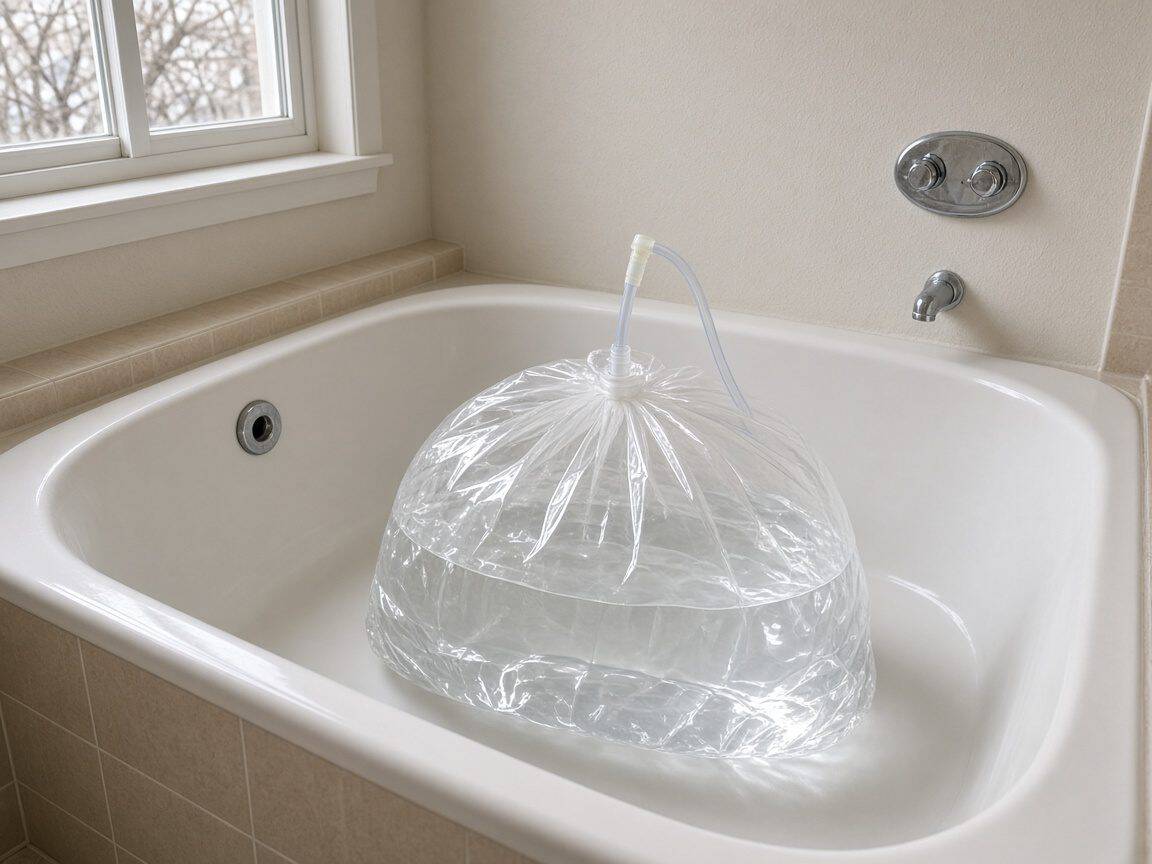
When a storm is in the forecast, your bathtub can become a large temporary tank, if you line it first.
A bathtub water storage bag is a plastic liner that sits in the tub. You fill it from the tap before a storm hits, while the water is still safe, then close it and draw water out as you need it.
Many kits include a small hand pump. They’re single-use, short-notice storage: the point is to capture a lot of clean tap water in the hours before you might lose it.
Capacity and how long the water keeps vary by product, so follow the manufacturer’s instructions and don’t assume a figure. Fill it only while your tap water is still safe; if a boil-water notice is already in effect, treat the water as unsafe.
Plain tub? Flushing and washing only. Water stored directly in an unlined bathtub is exposed to the tub surface and drain, so use it to flush toilets and for cleaning, not for drinking or cooking. (This is our own guidance; we didn’t find a CDC or EPA page that states it directly.)
55-Gallon Drums
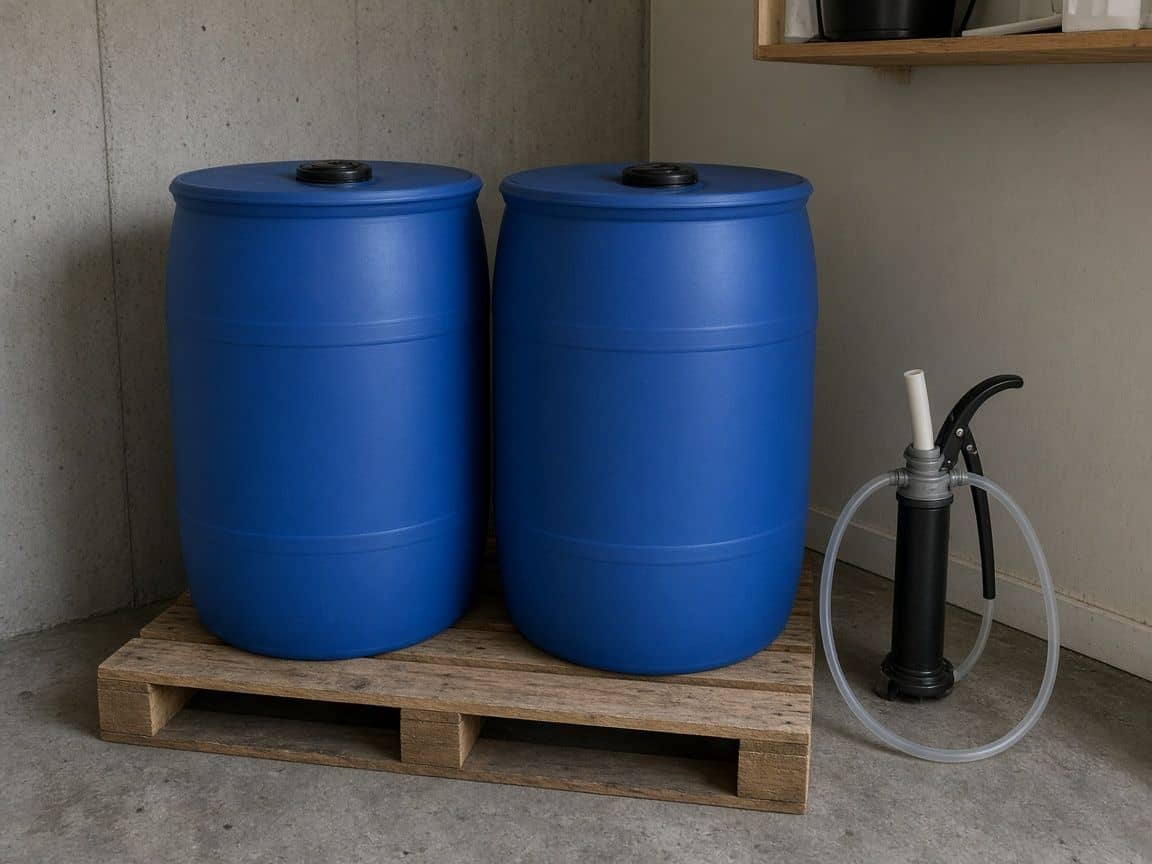
Once you’re past a few weeks for a family, drums are the most space-efficient way to store a large volume in one place. Look for food-grade drums made for water, and apply the same CDC container rules: clean and sanitize first, label and date, keep them cool (the CDC suggests 50°F–70°F), out of sunlight and away from chemicals.
Plan for weight. Water weighs about 8.3 pounds per gallon, so a full drum is far too heavy to move or tip.
Fill it where it will stay, set it on something that keeps it off bare concrete, and keep a hand pump or siphon with it. The CDC advises using a clean scoop or device each time and never touching the water with your hands.
Rain Barrels: Useful, But Not Drinking Water
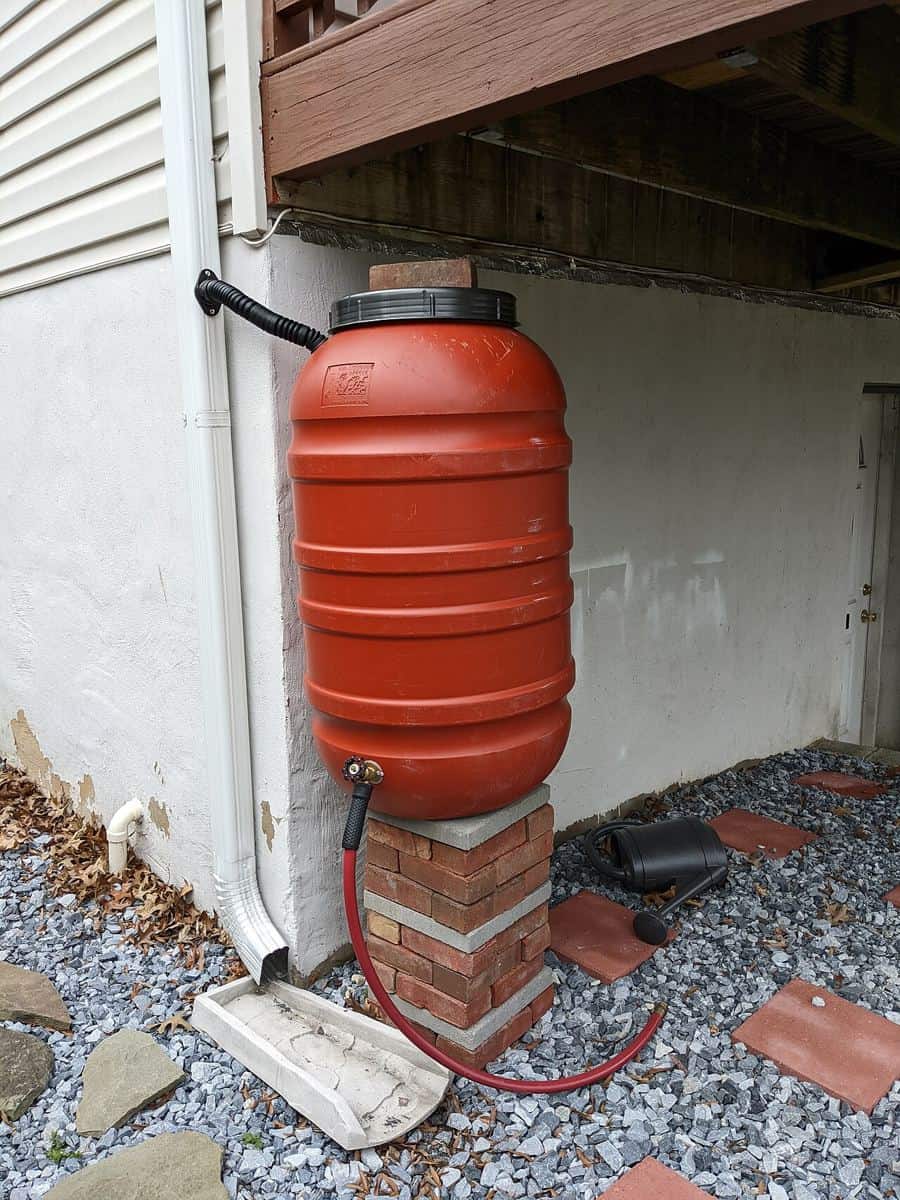
A rain barrel gives you a renewable supply for the garden, flushing and cleaning. It is not ready-to-drink water.
According to the CDC, rainwater isn’t necessarily safe to drink without first removing germs and chemicals, even when it looks clean. Roofs, gutters and pipes can add lead, copper or asbestos, and bird droppings can wash in.
Rain barrel water must be filtered AND treated before drinking. If you drink, cook or bathe with it, the CDC says to test it regularly and choose treatment that removes what’s actually in it. Some chemicals can’t be removed by boiling or bleach.
- Add a screen at the inlet, or empty the barrel at least every 10 days to stop mosquitoes (CDC).
- Consider a first flush diverter, which sends the dirtiest first runoff away from the barrel.
- Never let rainwater connect to the pipes carrying your drinking water.
- Check your state’s rules; the CDC notes collecting rainwater isn’t allowed everywhere.
Potable Water vs Gray Water
In an outage, sorting your water into “safe to drink” and “good enough to flush” stretches your supply a long way.
Potable water
Potable water is water that’s safe to drink: sealed store-bought water, your properly stored supply, or water you’ve boiled or disinfected. The CDC says to use only bottled, boiled or treated water for drinking, cooking and personal hygiene when your tap may be unsafe.
Gray water
Gray water is used water from sinks, showers and laundry. The EPA lists shower, sink and laundry water as a source that can be recycled for non-drinking uses such as toilet flushing.
At home in an emergency, you can reuse it to flush toilets or for some rough washing, but never drink it or cook with it, and keep it in clearly marked containers so nobody mistakes it for drinking water.
How to Make a DIY Water Filter
A homemade layered filter is a useful skill when all you have is cloudy water, as long as you know what it can’t do.
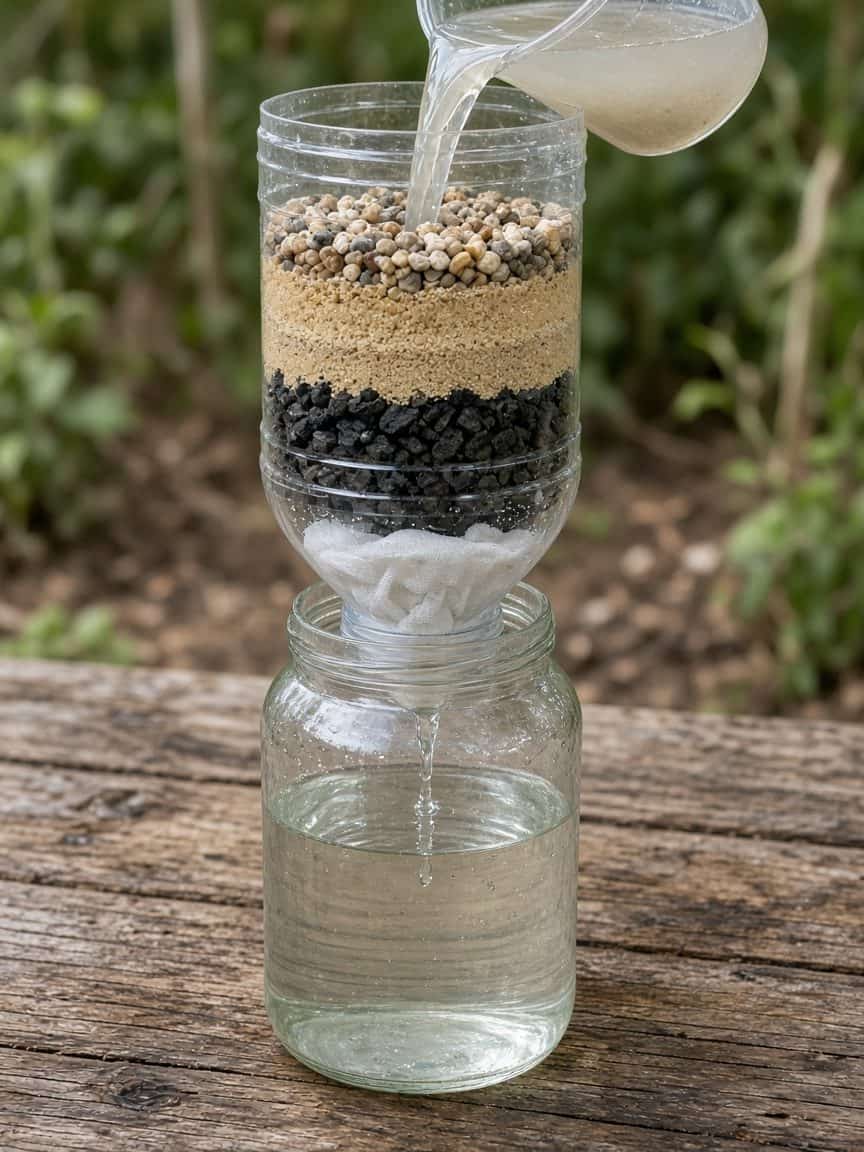
A DIY filter only strains out sediment and some particles so the water is clearer. It does not make water safe: it isn’t a substitute for treatment against germs, and it does nothing about chemicals.
The CDC’s own pre-treatment step for cloudy water is simply to filter it through a clean cloth, paper towel or coffee filter, or let it settle, before boiling or disinfecting. A layered filter is a bigger version of that.
- Cut the bottom off a clean plastic bottle (or use a clean bucket with small holes drilled in the base) and turn the bottle upside down over a clean container.
- Push a piece of clean cloth or a coffee filter into the neck as the bottom layer.
- Add a layer of crushed charcoal (plain charcoal, not briquettes treated with lighter fluid).
- Add a layer of fine sand, then a layer of coarser sand.
- Top it with a layer of small gravel.
- Pour cloudy water in slowly and collect what drips out. Discard the first runs and refilter if it’s still cloudy.
- Then treat it: boil or disinfect the water before anyone drinks it.
Always boil or disinfect after filtering. Boiling is the essential final step: bring the water to a rolling boil for 1 minute, or 3 minutes above 6,500 feet, according to the CDC.
If you can’t boil, disinfect it as described in Water Treatment Methods. A DIY filter on its own does not remove germs or chemicals.
Water Treatment Methods: Bleach, Tablets, UV and Boiling
Every stored or found water source eventually comes back to this section. Here’s what the CDC and EPA recommend.
Treatment methods at a glance (details below):
| Method | How | When | Caveats |
|---|---|---|---|
| Boiling | Rolling boil 1 minute (3 minutes above 6,500 ft), per the CDC | Best option whenever you can boil | Filter or settle cloudy water first |
| Unscented bleach | 8 drops per gallon, wait 30 minutes | When you can’t boil | Double for cloudy or very cold water |
| Disinfection tablets | Follow the label | When you can’t boil | May not kill parasites; avoid iodine if pregnant or thyroid issues |
| UV purifier | Portable UV unit | Small amounts of clear water | Doesn’t work well in cloudy water |
Boiling
Rolling boil 1 minute (3 minutes above 6,500 ft), per the CDC. Best option whenever you can boil. Filter or settle cloudy water first.
Unscented bleach
8 drops per gallon, wait 30 minutes, when you can’t boil. Double for cloudy or very cold water.
Disinfection tablets
Follow the label when you can’t boil. May not kill parasites; avoid iodine if pregnant or thyroid issues.
UV purifier
A portable UV unit for small amounts of clear water. Doesn’t work well in cloudy water.
Boiling (the best option)
According to the CDC, boiling is the best way to kill germs in water. If the water is cloudy, filter it through a clean cloth, paper towel or coffee filter, or let it settle first.
Then bring it to a rolling boil for 1 minute (3 minutes at elevations above 6,500 feet), let it cool, and store it in clean, sanitized containers with tight covers. Pouring it between containers or adding a pinch of salt per quart improves the flat taste.
Unscented household bleach
If you can’t boil, use regular unscented chlorine bleach; the EPA says not to use scented, color-safe or added-cleaner bleaches. The CDC’s table for bleach with 5%–9% sodium hypochlorite is:
| Amount of water | Bleach (5%–9% sodium hypochlorite) |
|---|---|
| 1 quart or liter | 2 drops |
| 1 gallon | 8 drops |
| 5 gallons | 40 drops (½ teaspoon) |
Double the amount if the water is cloudy, murky, colored or very cold. Stir and let it stand at least 30 minutes before drinking.
Follow the bleach label first if it has drinking-water instructions. Ready.gov adds that treated water should have a slight bleach odor.
Disinfection tablets
The EPA notes that tablets containing chlorine, iodine or chlorine dioxide can disinfect water; follow the label, because strengths differ. The CDC adds that chemical disinfectants kill viruses and bacteria but may not kill parasites; iodine and chlorine tablets won’t kill Cryptosporidium, while chlorine dioxide tablets will if used correctly.
Pregnant people, people with thyroid problems or iodine sensitivity should avoid iodine-treated water, and nobody should drink it for more than a few weeks.
UV purifiers
According to the CDC, portable UV units can kill parasites, bacteria and viruses in small amounts of clear water. UV doesn’t work well in cloudy water, so filter first.
What treatment can’t fix: the CDC says boiling or disinfecting cannot make water with fuel, toxic chemicals or radioactive material safe. Use another source and call your health department.
How to Tell Whether Water Is Safe to Drink
You can’t judge safety by sight or smell. The CDC warns that water carrying bacteria, viruses and parasites can look clean, and even a clear mountain stream generally isn’t safe to drink untreated.
What your senses can do is rule water out: the EPA says not to use water with floating material, a dark color or a questionable odor. A fuel or chemical smell means don’t use it at all.
Yard, ditch and floodwater: the CDC warns that outdoor water can carry livestock waste, sewage and chemicals, that wells can be contaminated during floods, and that water you suspect is contaminated with fuel or toxic chemicals can’t be made safe. Don’t drink standing water from yards, ditches or floodwater.
Test strips and home kits can screen for some things, but they test only for what’s on the label and can’t tell you water is safe. Treat a passing strip as information, not permission to skip treatment.
When to use a lab or your health department: for well water, the EPA recommends testing at least once a year for total coliform bacteria, nitrates, total dissolved solids and pH, using only labs certified for drinking water testing.
Your local health department may offer well testing, sometimes free. If your well was flooded, the EPA says to disinfect and test it afterward.
Rotation and Maintenance
Stored water only helps if it’s still good when you need it.
- First in, first out. Put new water at the back and use the oldest first.
- Replace water you bottled yourself every 6 months, and observe the expiration dates on store-bought water and pouches (CDC).
- Check seals and lids for cracks, leaks or bulging, and replace damaged containers.
- Keep it cool and dark (50°F–70°F per the CDC), away from sunlight, gasoline and pesticides.
- Keep unscented bleach (5%–9% sodium hypochlorite) on hand for treatment and sanitizing (CDC).
- Put a reminder on your calendar every six months to check dates, swap water and inspect containers.
Hidden Water Sources Inside Your House
If you run short, the CDC points out there’s often clean water already in your home:
- Water heater tank. Use the tank that feeds your faucets, never a boiler or radiator heating-system tank (CDC). The Regional Water Providers Consortium says to turn off the heater’s power source first: flip the breaker for an electric heater, or set a gas heater’s knob to pilot. Then close the cold-water supply valve, let air in by opening a hot-water faucet or the relief valve, and drain from the bottom valve into a clean container. The water may be very hot; wear gloves and eye protection.
- Toilet tank, not the bowl. Only if the water is clear and hasn’t been treated with cleaners that change its color (CDC).
- Pipes. Water left in your household plumbing can be drained from a low faucet after shutting the main valve and opening a high faucet to let air in. This comes from emergency-management guidance we didn’t open directly, so confirm it locally. Also, the CDC notes you may need to shut the main valve to keep contaminants out.
- Ice and canned food. Melted ice made from uncontaminated water, and liquid from canned fruit and vegetables (CDC).
- Pools and spas are for hygiene and cleaning only, not drinking (CDC).
If you have any doubt about these sources, treat the water before drinking it.
Printable Water Storage Checklist
Print this page section and tick items off. Everything here comes from the guide above.
Per person per day
- ☐ At least 1 gallon per person per day
- ☐ 3 days minimum; 2 weeks if possible
- ☐ Extra for pregnancy, illness, pets, hot weather
Containers to have
- ☐ Sealed store-bought water or pouches (check expiration dates)
- ☐ Food-grade jugs or stackable containers, tight lids, not glass
- ☐ 55-gallon drum + hand pump or siphon (optional)
- ☐ Bathtub storage bag for a forecast storm (optional)
Treatment supplies
- ☐ Unscented bleach, 5%–9% sodium hypochlorite, + dropper
- ☐ Disinfection tablets (follow the label)
- ☐ Pot and fuel for boiling
- ☐ Clean cloth or coffee filters for cloudy water
Rotation reminders
- ☐ Replace self-filled water every 6 months
- ☐ First in, first out
- ☐ Check seals, lids and expiration dates
- ☐ Store at 50°F–70°F, dark, away from chemicals
Hidden house sources
- ☐ Water heater tank: power off first, water may be very hot
- ☐ Toilet tank only, never the bowl, and not if cleaner is added
- ☐ Pipes: shut main valve, drain from lowest faucet
- ☐ Ice and canned-food liquid; pools for hygiene only
Gray water
- ☐ Reuse sink, shower and laundry water to flush toilets and for some washing
- ☐ Never drink it or cook with it; keep it in clearly marked containers
Yard, ditch and floodwater
- ☐ Don’t drink standing yard, ditch or floodwater
- ☐ Never use water that smells of fuel or chemicals; treatment can’t fix it
- ☐ Any outdoor water: filter, then boil or disinfect
DIY filter
- ☐ DIY filter: filter, then ALWAYS boil (1 min; 3 min above 6,500 ft)
Frequently Asked Questions
How much water should I store per person?
At least 1 gallon per person per day for 3 days, and a 2-week supply if possible, according to the CDC. Store more for pregnant women, people who are sick, pets and hot climates.
How often should I replace stored water?
The CDC says to replace water you’ve stored yourself every 6 months and to observe the expiration date on store-bought water.
How long do I boil water to make it safe?
Bring it to a rolling boil for 1 minute, or 3 minutes at elevations above 6,500 feet, per the CDC. Let it cool before using it.
How much bleach do I add to a gallon of water?
For unscented bleach with 5%–9% sodium hypochlorite, the CDC says 8 drops per gallon, doubled if the water is cloudy or very cold. Stir and wait at least 30 minutes.
Can I drink water from a rain barrel?
Not without treatment. The CDC says rainwater isn’t necessarily safe to drink, even when it looks clean, and should be tested and treated before drinking, cooking or bathing.
Does a homemade water filter make water safe to drink?
No. A DIY sand, gravel and charcoal filter only removes sediment and some particles. Always boil or disinfect the water afterward.
This guide is general preparedness information, not medical or public-health advice. Follow instructions from your local health department during an emergency.