
Disclosure: As an Amazon Associate, Survival Know How earns from qualifying purchases. If you buy through a link on this page, we may earn a small commission at no extra cost to you.
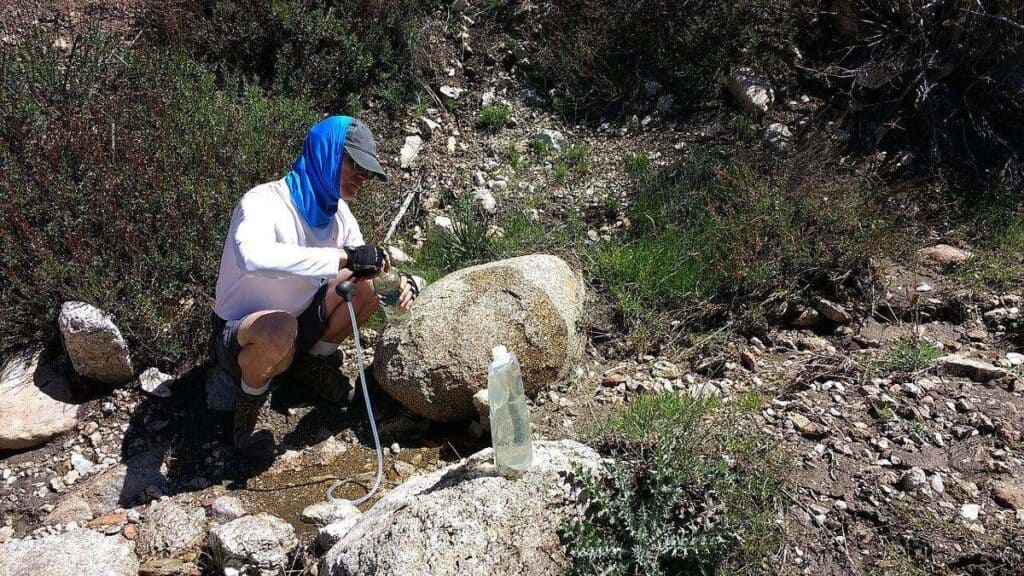
Sawyer Squeeze vs LifeStraw is one of the most common water filter questions from campers and preppers. Both are small hollow-fiber filters that make clear, fresh water much safer to drink. They work in very different ways, though, and that difference matters more than the specs.
Quick Verdict
- Choose the Sawyer Squeeze if you want to fill bottles, cook, or share water. It has a finer 0.1 micron filter, comes with pouches and adapters, and can be cleaned with the included plunger.
- Choose the LifeStraw Personal if you want the lightest, cheapest backup you can drink through directly. It weighs 1.6 oz and costs much less.
- Either way: neither one removes viruses or chemicals. In a disaster, or near human activity, boil or disinfect your water too.
Sawyer Squeeze vs LifeStraw: Comparison Table
| Spec | Sawyer Squeeze | LifeStraw Personal |
|---|---|---|
| Filter type | 0.1 micron absolute hollow fiber membrane | 0.2 micron membrane microfilter |
| Bacteria | Removes 99.99999% | Removes 99.999999% |
| Protozoa / parasites | Removes 99.9999% (e.g. Giardia, Cryptosporidium) | Removes 99.999% |
| Microplastics | Removes 100% (maker’s claim) | Removes 99.999% |
| Viruses | Not claimed | Not claimed |
| Weight | Filter about 3 oz; full kit listed at 8.19 oz | 1.6 oz (46 g) |
| Flow rate | Not listed on the product page | 2.1 L/min (±30%) |
| Filter life | No volume given; lifetime limited warranty | Up to 1,000 gal (4,000 L) |
| How you use it | Squeeze pouch, screw onto 28 mm bottles, inline, or gravity | Drink directly through the straw |
| Approx. maker price (checked Nov 1, 2026) | About $45.99 | About $17.95 |
Prices change often, so check the current price on Amazon before you buy.
Sawyer Squeeze: The Versatile Choice
The Sawyer Squeeze uses a 0.1 micron absolute hollow fiber membrane. Sawyer says it removes 99.99999% of bacteria such as salmonella, cholera and E. coli, 99.9999% of protozoa such as Giardia and Cryptosporidium, and 100% of microplastics. The filter itself weighs about 3 ounces.
Its biggest advantage is flexibility. You fill a pouch at a stream, screw on the filter, and either drink from it or squeeze clean water into a bottle or pot. It also threads onto standard 28 mm bottles, and the kit includes a cleaning plunger, gravity tubing and inline hydration pack adapters. That means you can filter water to cook with, store, or share, which a straw can’t do.
- Pros: finer 0.1 micron filter, fills bottles and pots, several setup options, cleaning plunger included, lifetime limited warranty.
- Cons: costs more, heavier as a full kit, pouches take some care.
See the Sawyer Squeeze on Amazon
LifeStraw Personal: The Ultralight Backup
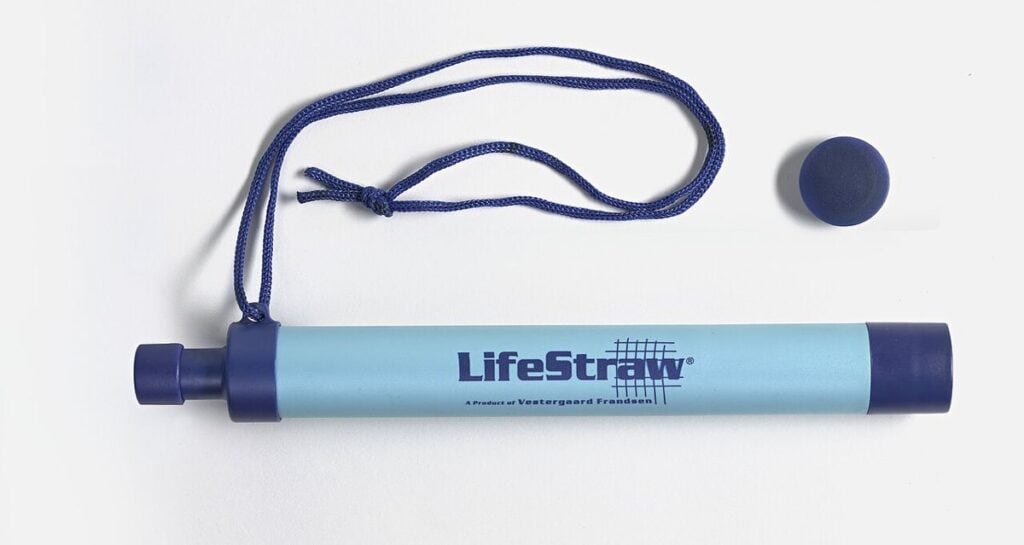
The original LifeStraw is a simple straw with a 0.2 micron membrane microfilter. LifeStraw says it removes 99.999999% of bacteria, 99.999% of parasites, and 99.999% of microplastics, dirt, sand and cloudiness. It weighs 1.6 oz, lasts up to 1,000 gallons (4,000 liters), and has an unlimited shelf life before first use. LifeStraw lists its flow rate at about 2.1 liters per minute (±30%).
The catch is that you drink straight from the source through the straw. It can’t easily give you clean water to carry, cook with, or share. That makes it a good backup or “just in case” filter, and a weaker choice as your only water system.
- Pros: very light, inexpensive, nothing to set up, long shelf life for kits.
- Cons: drink-only design, you have to get down to the water, can’t fill containers.
What These Filters Do NOT Remove
Important safety note: Both filters remove bacteria and protozoa. Neither removes viruses, and neither is designed to remove chemicals, pesticides, fuel or heavy metals. The CDC notes that a filter with an absolute pore size of 0.3 micron or smaller removes bacteria and parasites, but not viruses.
- Boil when you can. The CDC says boiling is the best way to kill germs: bring clear water to a rolling boil for 1 minute, or 3 minutes above 6,500 feet.
- Filter, then disinfect. If you can’t boil, the CDC’s next-best option is to filter first and then disinfect with unscented household bleach, iodine, or chlorine dioxide tablets, which kill viruses and bacteria.
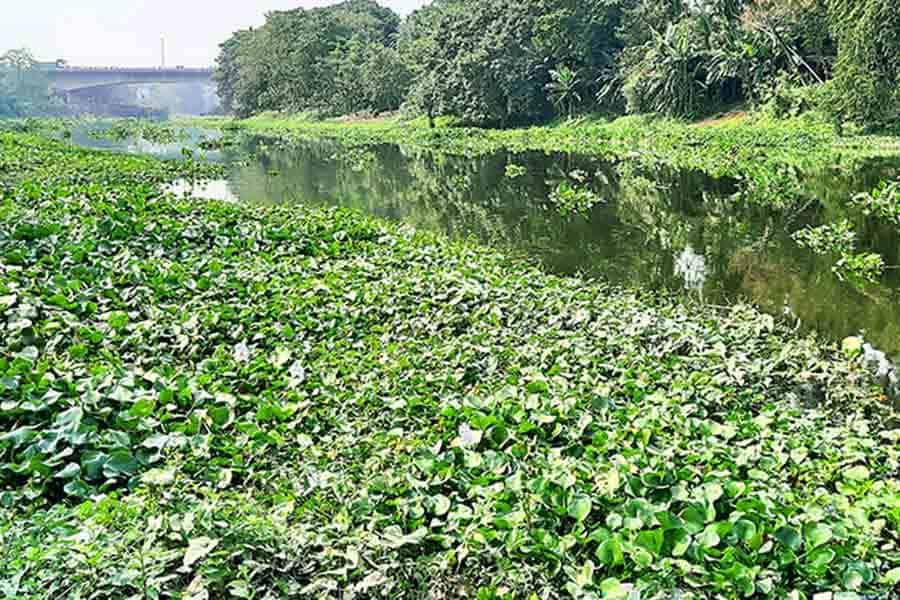
- Assume viruses after disasters. Floodwater, hurricane runoff, and water near campsites, farms or towns can carry viruses like norovirus. Filter and disinfect.
- Chemicals need a different water source. The CDC says boiling or disinfecting cannot make water with harmful chemicals, toxins or radioactive material safe. Use bottled or stored water instead.
Which One for Your Situation?
Backpacking
The Sawyer Squeeze. On a multi-day trip you need water for cooking and refilling bottles, and the squeeze pouch or a gravity setup handles that. A LifeStraw can ride along as a light backup.
Day Hikes
Either works. If you carry plenty of water and only want an emergency option, the 1.6 oz LifeStraw is hard to beat. If you plan to refill along the trail, the Squeeze fits on a standard bottle.
Bug-Out Bag
The Sawyer Squeeze as your main filter, plus disinfection tablets for viruses. A LifeStraw is a cheap, light second layer.
Home Emergency Kit
Stored water comes first. After that, the Sawyer Squeeze with its gravity tubing lets you filter larger amounts for a household. Plan to boil or disinfect too, since storms and floods can contaminate water with viruses. See our hurricane essentials list and our guide to items you’ll want during a blackout.
Want more options? Read our roundup of affordable camping water filters, or start with our 7 steps to start prepping.
Sawyer Squeeze vs LifeStraw FAQ
Is the Sawyer Squeeze better than LifeStraw?
For most campers, yes. It has a finer 0.1 micron filter and can fill bottles and pots. The LifeStraw is lighter and cheaper, but you can only drink through it.
Do Sawyer or LifeStraw filters remove viruses?
No. Both remove bacteria and protozoa but not viruses. Boil the water, or filter it and then disinfect it, when viruses are a risk.
Can these filters make floodwater safe?
Not on their own. Floodwater may carry viruses and chemicals. The CDC says chemically contaminated water can’t be made safe by boiling or disinfecting, so use stored or bottled water.
How long does a LifeStraw last?
LifeStraw rates the Personal filter for up to 1,000 gallons (4,000 liters), with an unlimited shelf life before use.
Which is better for a bug-out bag?
The Sawyer Squeeze, because it can fill containers. Add chemical disinfection tablets for viruses, and keep a LifeStraw as a light backup if you have room.
How much does each cost?
On the makers’ sites on November 1, 2026, the Sawyer Squeeze kit was about $45.99 and the LifeStraw Personal about $17.95. Check Amazon for current prices.
Bottom Line
Pick the Sawyer Squeeze if you want one filter that does it all. Pick the LifeStraw if you want a featherweight backup. Whichever you choose, remember that a filter isn’t a purifier. Pack a way to boil or disinfect water, and practice with your filter before you need it.
Recent Posts
So 2020 was a rough year. We saw massive hurricanes, including one spot in the Gulf Coast that was stuck by two different hurricanes mere days from one another. We also witnessed one of the...
When many people get into prepping, they commonly focus on fantasies about the end of the world and building a bug-out bag to help prepare them. But the truth is these scenarios only come...